
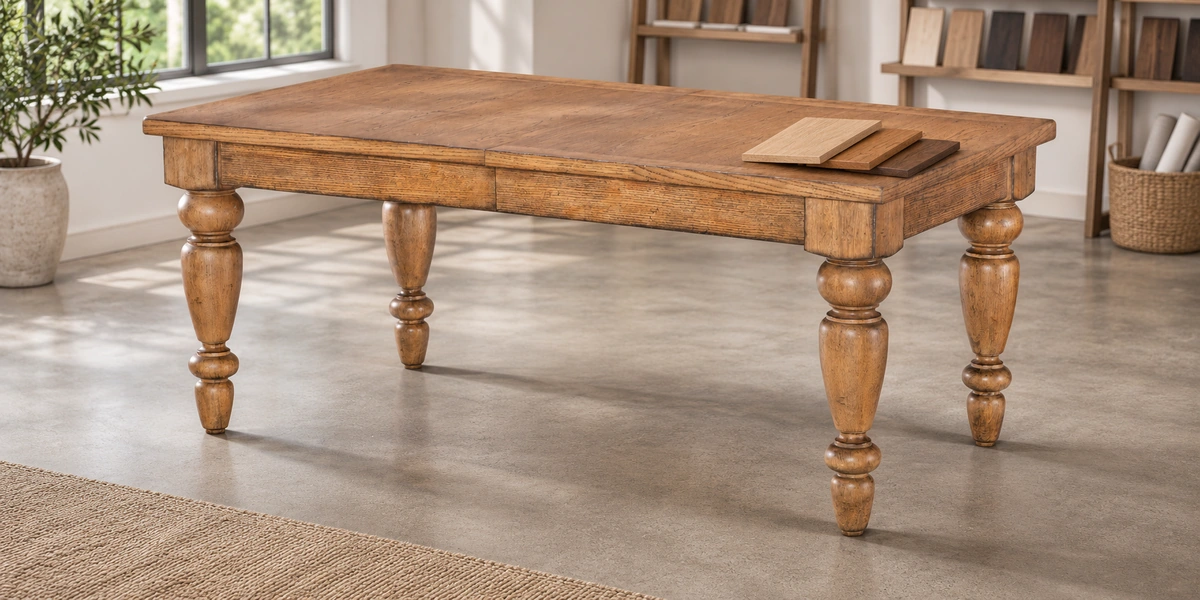
Wood furniture finishes provide essential surface protection while defining color depth, specular sheen, and tactile warmth. High-traffic hospitality and dining surfaces frequently demand durable film-forming topcoats, whereas accent furniture prioritizing organic grain texture and field repairability benefits from penetrating oil or hardwax oil formulations.
Focusing on indoor residential and commercial case goods, this guide outlines standard coating technologies, visual characteristics, and quality control protocols to translate aesthetic intent into actionable production specifications.
What Are Wood Furniture Finishes?
Wood furniture finishes encompass chemical and mechanical surface treatments designed to shield timber from environmental degradation while enhancing its visual appeal. Common formulations include penetrating oils, clear protective topcoats, and pigmented paints.
A wood stain alters coloration while keeping natural grain patterns visible. A clear topcoat deposits a transparent protective barrier over raw or stained timber. Pigmented paint carries sufficient opacity to conceal the underlying wood grain entirely. The term “finish” also designates the complete multilayer system, extending from preliminary sealers and stains through to the final protective topcoat.
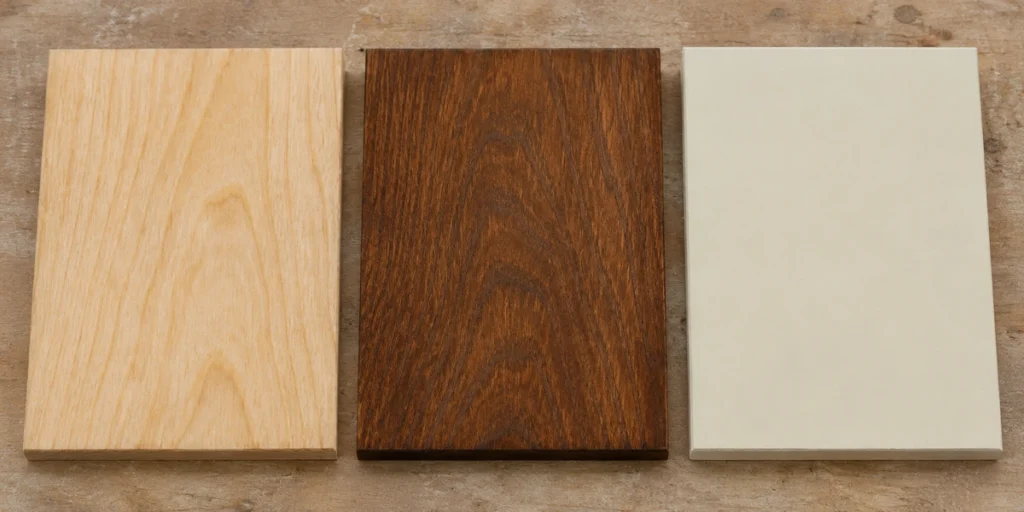
Specifiers must distinguish surface finishes from underlying structural substrates. The designation “walnut finish” describes a surface color and grain aesthetic rather than verifying the presence of solid American walnut lumber. This distinction carries significant weight when evaluating custom furniture costs, as core framing substrates, decorative surface veneers, and multi-stage finishing schedules all dictate manufacturing pricing.
Types of Wood Finishes for Furniture
Commercial wood coatings fall into distinct chemical and operational categories, including drying oils, hardwax oils, paste wax, shellac, industrial lacquers, and curing varnishes. Certain formulations penetrate the cellular structure of the timber, whereas others polymerize into an external protective film over the substrate.
These categories represent practical formulation families rather than rigid chemical boundaries. Polyurethane, for instance, exists in both water-reducible and solvent-borne chemistries. The matrix below outlines operational benchmarks for properly cured, factory-applied finishes:
| Finish Type | Appearance | Performance and Limitations | Maintenance and Repair | Typical Uses |
| Drying oils (such as tung or linseed oil) | Accentuates grain figure with an amber cast | Minimal mechanical barrier relative to build-up topcoats | Allows reapplication; demands routine replenishment | Occasional accent furniture and decorative carvings |
| Hardwax oil | Preserves open-pore texture under low sheen | Variable chemical resistance; requires compatible maintenance soaps | Permits spot repair without stripping adjacent zones | Dining tables, credenzas, and natural-look furniture |
| Paste wax | Imparts a muted, soft luster | Offers low thermal and spill resistance as a primary coating | Requires periodic buffing; residues impede future recoating | Fine decorative objects or sealed antique surfaces |
| Shellac | High clarity to warm amber with rich depth | Vulnerable to alcohol dissolution and heat contact | Requires skilled french polishing or artisan spot repair | Traditional reproductions and architectural restorations |
| Lacquer | Water-clear or pigmented across varied gloss levels | Catalyzed formulations offer superior chemical hardness over nitrocellulose | Repair protocol depends strictly on resin crosslinking chemistry | Production case goods and commercial cabinetry |
| Varnish (including polyurethane varnish) | Continuous protective film with varied resin tones | High wear, moisture, and chemical resistance | Extensive spot damage typically requires complete panel recoating | Work desks, dining surfaces, and institutional storage |
Performance varies substantially within each formulation class. Traditional nitrocellulose lacquer differs markedly from acid-catalyzed conversion lacquer, which relies on chemical curing agents to develop superior solvent resistance. Merchandisers and specifiers should evaluate certified technical data sheets rather than relying solely on umbrella category names.
Choosing Natural Wood Furniture Finishes for the Desired Look
Specifying a “natural look” refers to highlighting the authentic figure and character of the timber rather than requiring coatings derived exclusively from organic raw materials. State specific aesthetic goals clearly within the furniture OEM brief to establish clear benchmarks for sampling and pre-production sign-off.
Color and Grain Visibility
Evaluate finishes by their physical reaction with the target timber species rather than trusting abstract catalog terms like “clear” or “natural.”
Raw penetrating oils routinely amber pale timber, imparting a perpetually wet appearance. In contrast, specialized formulas containing micro-white pigments counteract this shift to preserve raw Scandinavian tones. Penetrating stains shift wood tone while accentuating open pore architecture, whereas high-solids paints veil the wood completely.
Always evaluate color swatches on the exact wood species and cut planned for mass production. Quarter-sawn solid lumber, flat-cut boards, and engineered veneer sheets absorb color and stain vehicles at differing rates. Audit physical finish and color matching under calibrated lighting before approving digital or printed references.
Sheen and Surface Feel
Evaluate specular sheen and tactile texture as independent variables, as low light reflectance does not correlate with a specific physical feel.
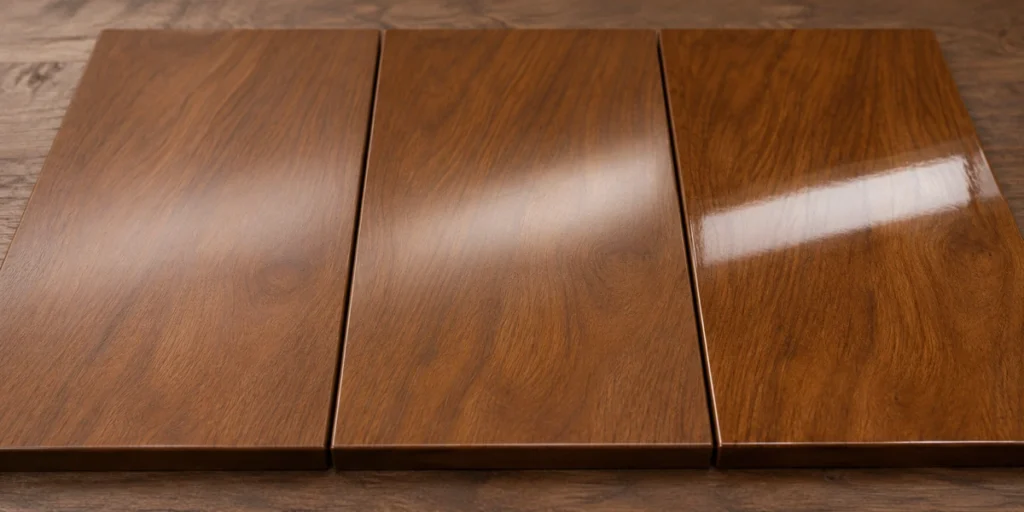
Matte sheens diffuse incident light, satin formulas provide a subtle glow, and gloss coatings produce sharp mirror reflections. Most professional coating systems provide adjustable gloss levels via matting agents, meaning gloss rating alone reveals nothing about underlying resin chemistry.
Tactile texture reflects grit sequencing, pore filling, and dry film thickness. A glass-smooth, fully filled tabletop and an open-grain brushed board can both register a flat matte sheen. Inspect control samples under diffuse daylight for chromatic fidelity, transitioning to low-angle raking light to evaluate surface levelling and microscopic defects.
How to Choose the Best Finish for Wood Furniture
Begin by assessing anticipated physical and chemical exposure, balancing aesthetic preferences against ongoing maintenance commitments. Pinpoint probable liquid spills, surface abrasion, cleaning chemicals, and end-user maintenance tolerance to narrow coating candidates.
Dining Tables and Desks
High-solids polyurethane or documented catalyzed coatings offer the most reliable baseline for demanding work and dining tops.
Dining tables face constant exposure to acidic food, hot liquids, and frequent sanitization. Executive desks encounter continuous contact from computer peripherals, stationery, and sliding objects. Request verified ASTM stain and scratch test reports rather than accepting generalized marketing claims of durability.
For cohesive dining collections, horizontal tabletops require substantially higher scratch and stain ratings than vertical chair spindles or cabinet sides. Hardwax oil formulations remain viable when their verified stain resistance matches client expectations and maintenance agreements include scheduled replenishment.
Coffee Tables and Side Tables
For cocktail tables regularly subjected to beverage condensation and serving platters, specify a high-performance polyurethane or a verified moisture-resistant film. For accent side tables receiving minimal daily handling, penetrating oils or matte hardwax systems offer an appealing natural hand with straightforward spot repair.
A central coffee table frequently used for casual dining requires far stricter finish standards than a perimeter lamp pedestal. Dimensional scale should never be mistaken for reduced functional demand.
When sourcing an end table with customizable top and base materials, define coating specifications for each substrate independently. The top panel requires strict stain protection, whereas turned metal or solid timber legs prioritize chip and scuff resistance.
Bed Frames and Dressers
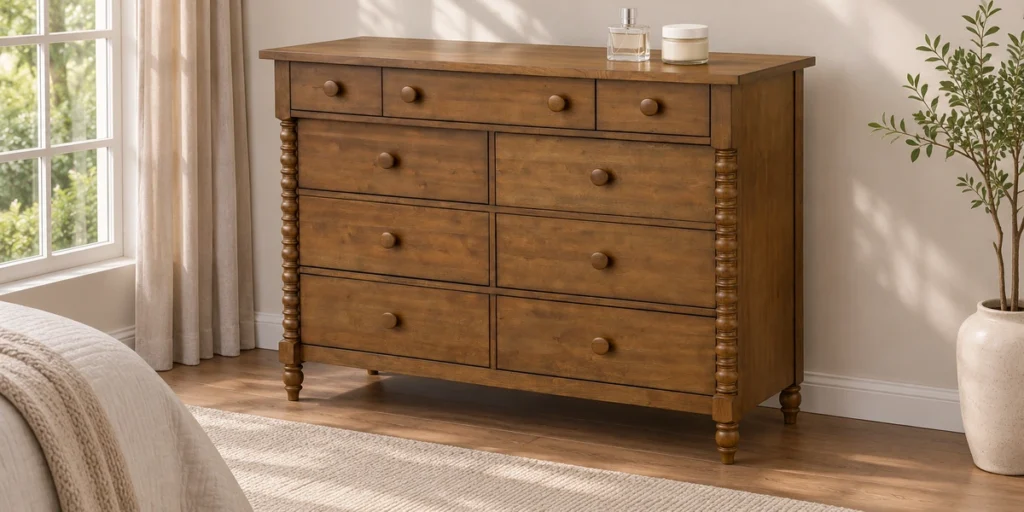
Bed frames prioritize resistance to handling oils and impact along lower perimeter rails. Conversely, dresser credenzas exposed to alcohol-based perfumes, lotions, and cosmetics demand specialized chemical resistance that standard bed-rail coatings cannot provide.
Treat cosmetic solvents and aerosol overspray as aggressive chemical hazards during specification. Horizontal dresser tops encounter distinctly harsher exposures than vertical drawer fronts or architectural headboards.
Across unified coordinated bedroom collections, establish consistent visual harmony across all pieces. Achieving identical color and sheen values does not require utilizing identical chemical coatings on every component, provided all coating variations are formally recorded and validated through physical control samples.
How to Specify and Approve a Furniture Finish
Specify complete chemical coating systems and evaluate aesthetic criteria and physical durability independently. An aesthetically flawless master sample provides zero guarantee of resistance against chemical staining or mechanical abrasion.
Incorporate the following parameters into the technical procurement package:
- Document the wood species, substrate core (solid timber versus engineered core with face veneer), and final sanding grit.
- Record proprietary coating brands, stain codes, specular gloss ratings, pore fill depth, and tactile haptic targets.
- Itemize critical chemical exposure hazards, citing specific substances such as hot coffee, wine, alcohol, or commercial detergents.
- Establish standardized test methods, contact dwell times, and objective acceptance thresholds prior to testing.
- Authorize control samples fabricated on the actual project substrate, encompassing edge profiles and expansive panels.
- Assign each approved master sample a unique control number, validation date, and revision index, documenting acceptable tolerances for natural grain variance.
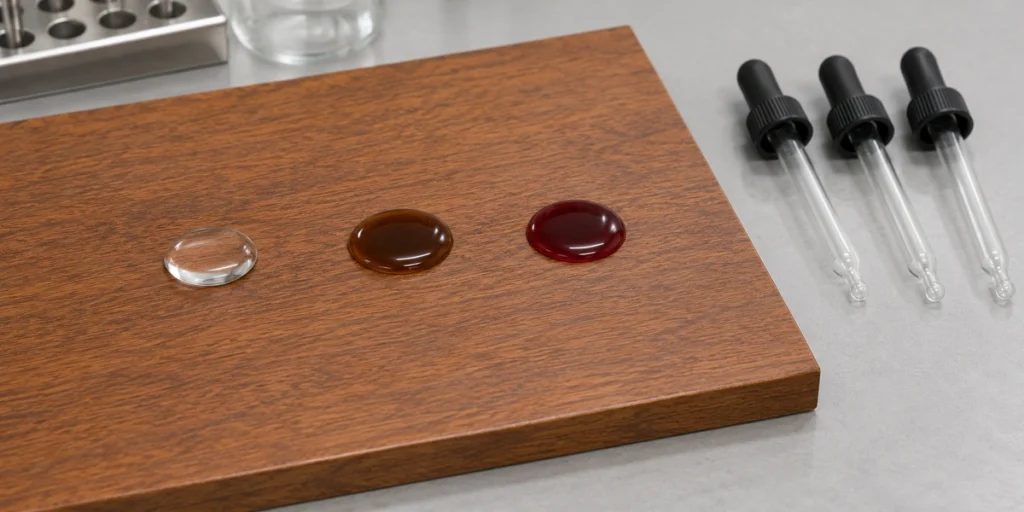
Differentiate surface dry times from the full crosslinking cure, during which the coating achieves maximum hardness. General Finishes specifies distinct milestones for touch-dry, light service, and complete cure on its High Performance series. For its High Performance Water-Based Topcoat, the manufacturer establishes a 21-day cure cycle under optimal conditions of 70°F (approx. 21°C) and 50% relative humidity. Lower ambient temperatures or elevated humidity prolong this transition, making adherence to technical data sheets vital when planning packing and container loading.
Audit bulk production lots against approved control samples. Verify color uniformity, gloss consistency, film thickness, edge coverage, and freedom from orange peel or entrapment voids. Keep physical lab test certificates archived as permanent quality assurance records.
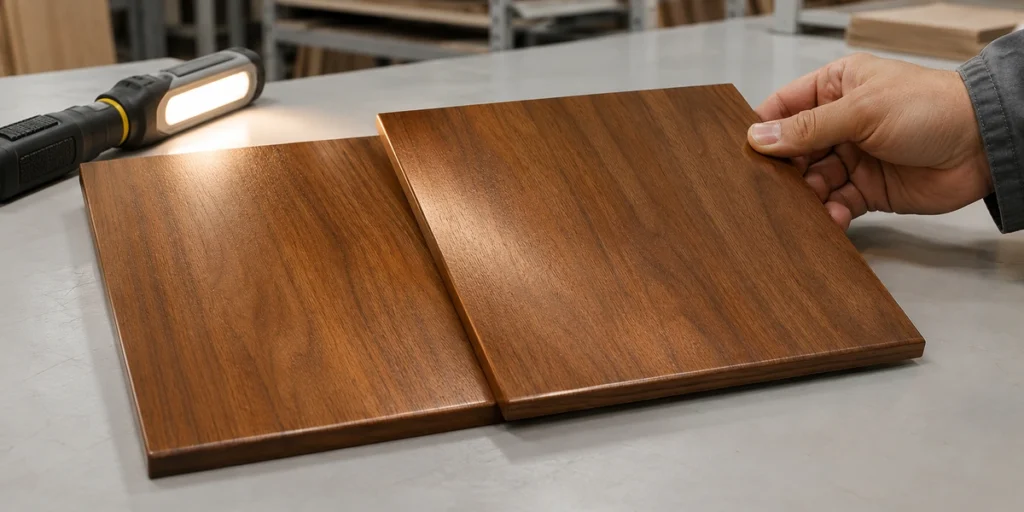
To validate finishes for an upcoming production run, submit your finish requirements to LEHOME with design drawings, service parameters, core substrates, order quantities, and target aesthetics. Providing these criteria upfront accelerates prototyping and commercial quotations.
Frequently Asked Questions
Can a Wood Finish Prevent Seasonal Expansion and Contraction?
Protective coatings slow moisture transfer, yet they cannot stop solid lumber from expanding and contracting with ambient humidity shifts. Long-term dimensional stability requires proper kiln drying paired with floating joinery and slotted fasteners that allow natural movement.
Does a Low-VOC Wood Finish Mean Furniture Is Formaldehyde-Free?
A low volatile organic compound rating applies strictly to airborne solvents evaporating from the liquid finish, not the structural adhesives or composite substrates underneath. Retailers must audit independent laboratory reports that certify the fully assembled unit rather than the topcoat in isolation.
Are All Wood Furniture Finishes Suitable for Direct Food Contact?
Standard furniture topcoats lack regulatory clearance for direct food contact and must not substitute for certified food grade oils. Culinary knife scoring easily breaches protective barriers, exposing raw timber to liquid penetration and bacterial growth.