
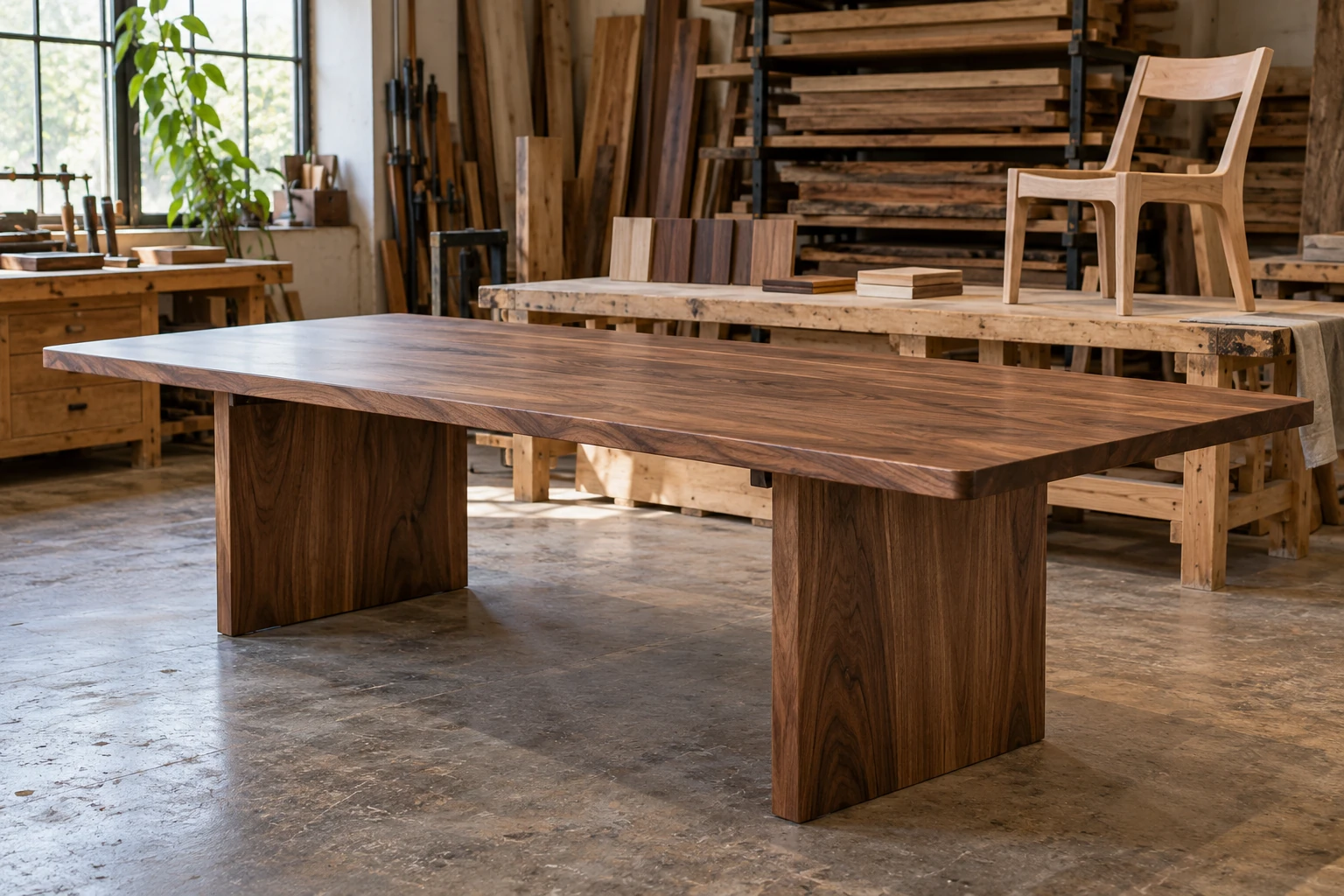
Typical lead times for custom luxury furniture orders run around 8 to 16 weeks for domestic workshop orders and 12 to 24 weeks or more for European imports. Complex bespoke commissions can require 6 to 12 months when they involve original design development, unusual construction, or special materials.
Treat these figures as planning ranges rather than interchangeable delivery promises. A workshop may quote production alone, while a dealer includes transportation. Understanding customization, approval requirements, and delivery scope helps you choose when to order and protect your move-in schedule.
How Long Does Custom Luxury Furniture Usually Take?
Allow several months for custom luxury furniture, with extra time for imported pieces or designs developed from scratch. The following comparisons separate customization depth from furniture category so you can identify which schedule fits your order.
Lead Times by Customization
Choosing a catalog design in an available finish requires less development than changing its structure. A fully bespoke commission may need engineering, prototypes, and material sourcing before production starts.
| Order Type | Typical Lead Time | When the Clock Starts | What the Timeframe Includes |
| Quick-ship selection | About 2 weeks for selected programs | Payment and availability confirmed | Dispatch preparation for limited configurations; transportation may be additional |
| Made-to-order design | Around 9 to 14 weeks; larger pieces may take 14 to 16+ weeks | Order and required specifications confirmed | Existing design produced in selected materials or finishes |
| Custom or tailored order | Around 12 to 20 weeks | Required approvals and materials received | Modified dimensions, finishes, or upholstery; confirm transportation separately |
| Complex bespoke commission | Can require 6 to 12 months | Commission accepted under an agreed development schedule | Original design, engineering, sampling, and manufacture; delivery scope varies |
That six-month allowance applies mainly to complex commissions. Adapting an established design usually takes much less time.
Lead Times by Furniture Type
Use these category ranges to spot potential bottlenecks. Each range covers a different manufacturing scope, so confirm transportation separately.
| Furniture Type | Standard Production | More Complex Work |
| Sofas and upholstered chairs | 8 to 12 weeks with manufacturer fabrics | 12 to 16 weeks for complex configurations or nonstandard dimensions |
| Tables and storage furniture | 8 to 10 weeks for catalog designs and standard finishes | 10 to 14 weeks for custom finishes; artisan pieces may take 12 to 16+ weeks |
| Cabinetry and architectural woodwork | 10 to 14 weeks for established workshop designs | 16 to 20 weeks for complex construction and hand-finishing |
| Custom rugs | Around 8 to 12 weeks for tufted designs | 12 to 24 weeks for hand-knotted designs |
| Decorative lighting | 8 to 12 weeks for made-to-order fixtures | 12 to 16+ weeks for artisan glass or forged metalwork |
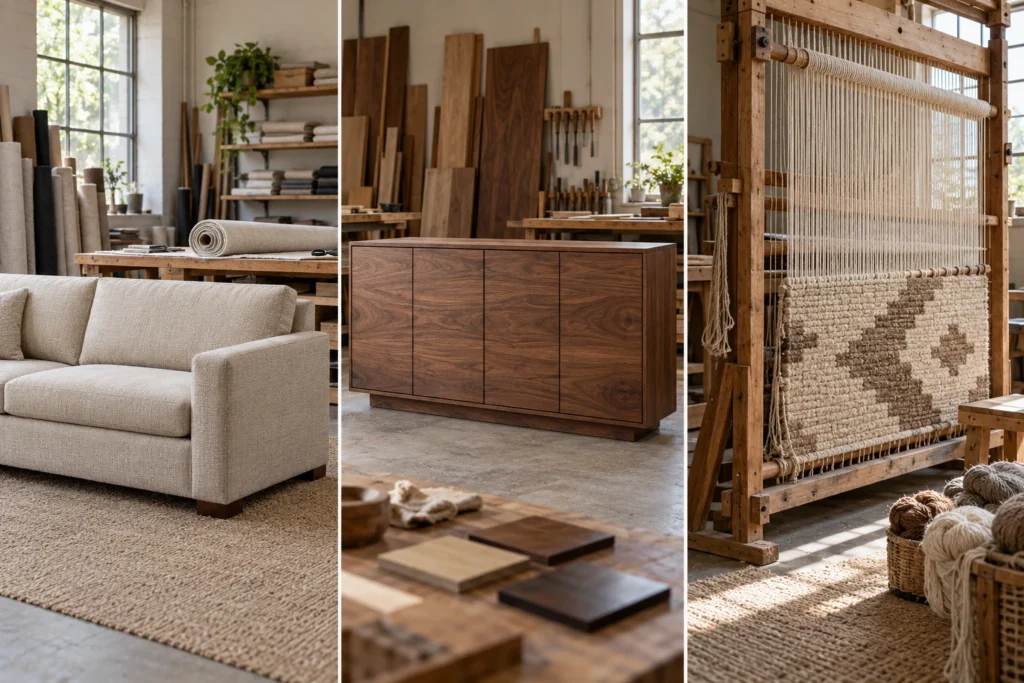
A hand-knotted rug can take longer than the sofa placed over it. Within coordinated dining collections, confirm the table, seating, and storage schedules individually instead of assuming everything finishes together.
When Does the Lead Time Clock Start?
Production timing usually begins once the supplier receives all required payments, approvals, and materials. Paying a deposit alone often leaves several tasks open.
Deposit and Design Approval
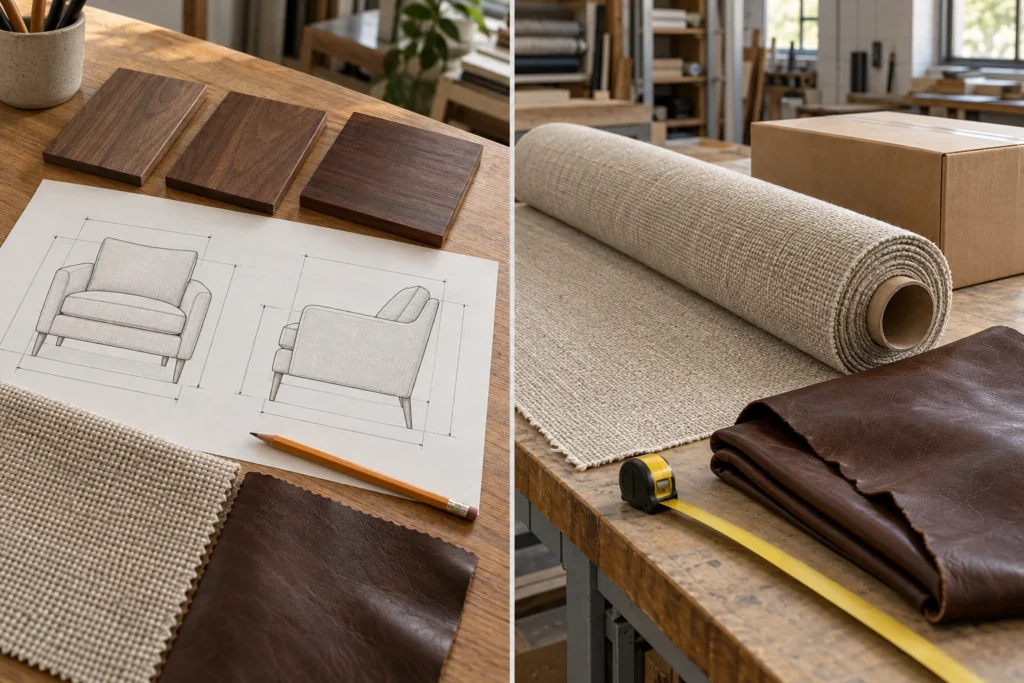
A supplier may ask for a deposit or full payment before releasing an order. Nonstandard furniture can also require signed production drawings and approved finish samples.
Drawings set the dimensions, construction, and functional details, while a finish sample sets the accepted appearance. Some manufacturers need several weeks to prepare these items before production begins.
Ask for written confirmation of:
- The outstanding approvals.
- Whether the quoted period includes sample development.
- The production release date.
- Whether later changes require a revised schedule.
Repeated revisions can delay release even when the workshop has open capacity.
Customer-Supplied Fabric and Leather
Customer’s Own Material (COM) refers to buyer-supplied fabric, and Customer’s Own Leather (COL) refers to buyer-supplied leather. Both options introduce a second supply chain that must meet the furniture order’s requirements.
When a 12-week production period starts only after fabric arrives, material delivered six weeks after payment pushes completion to week 18, before transportation.
Confirm material suitability and quantity before shipping. Pattern matching, fabric width, and directional textures can change the required yardage. Label packages with the project and furniture reference so the workshop can match them to the order. Missing material or unclear labels can hold up release.
Factors Affecting Custom Luxury Furniture Lead Times
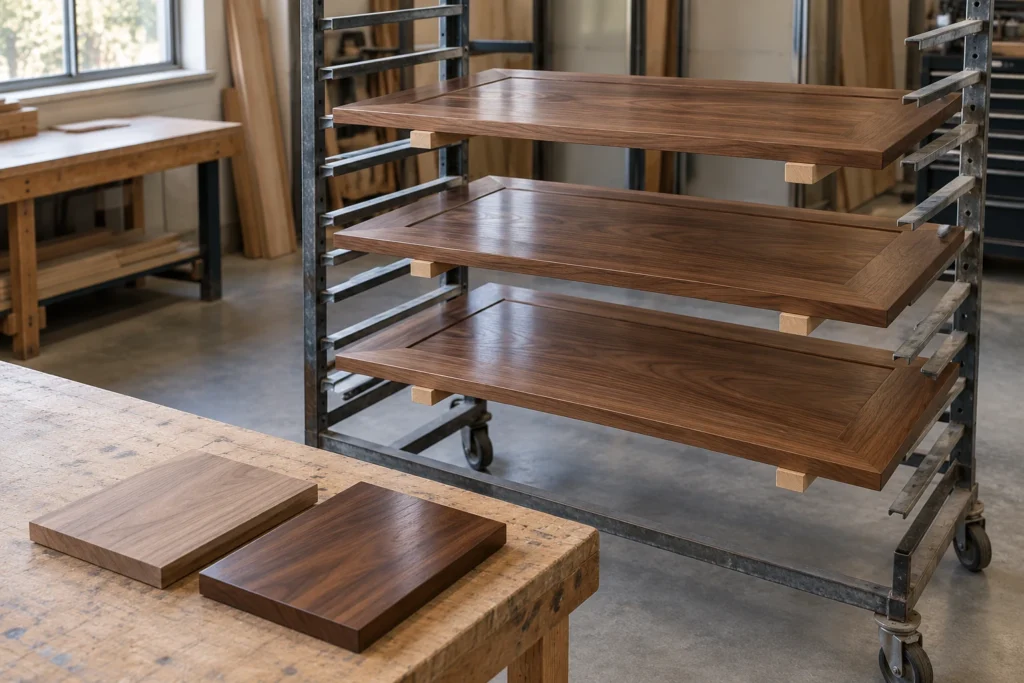
Materials, construction complexity, finishes, and workshop capacity determine how much work an order requires. Special veneer, stone, hardware, or woven-to-order fabric may need sourcing before manufacture. Curved components and unusual joints can require extra engineering or sampling.
A sculptural table shows why form, proportions, construction, and material combinations should be settled together. Changing one element can affect the others. Finishes also require specific application and curing stages. Curing is the time a coating needs to develop its intended properties, and adding workers cannot speed up that process. An accepted order may also wait for workshop capacity. The quoted period can cover both queue time and hands-on production.
The Delivery Process From Factory to Home
Factory completion is followed by packing, collection, transportation, and destination handling.
Imported furniture may also need customs clearance and transfers between carriers. Shipment consolidation, which combines several orders into one freight movement, lowers costs yet adds waiting time before departure.
Air freight can shorten transit for suitable pieces, while sea freight generally fits larger shipments. Getting an accurate transit allowance requires a confirmed route, service level, and departure schedule. The buyer FAQ describes the factory handoff as protection, packing, and preparation for loading and shipment. Treat this handoff as a separate milestone from arrival at your home.
Key Factors Behind Custom Luxury Furniture Lead Times
The longest sequence of dependent tasks determines when an order can finish. Designers call this sequence the critical path. Drawing preparation and material sourcing may overlap, whereas upholstery must wait for the approved covering material. Adding every task’s duration together can overstate the schedule, while overlooking dependencies can understate it.
Seasonal closures and busy production periods also affect capacity. Ask for the workshop’s actual closure dates and order cutoff instead of applying a fixed holiday allowance. During status updates, ask which unfinished task controls completion and what must happen next. The answer shows whether the hold-up involves approval, materials, production, or transportation.
From Factory Completion to Home Delivery
After the main transport journey, receiving, inspection, and installation still take time.
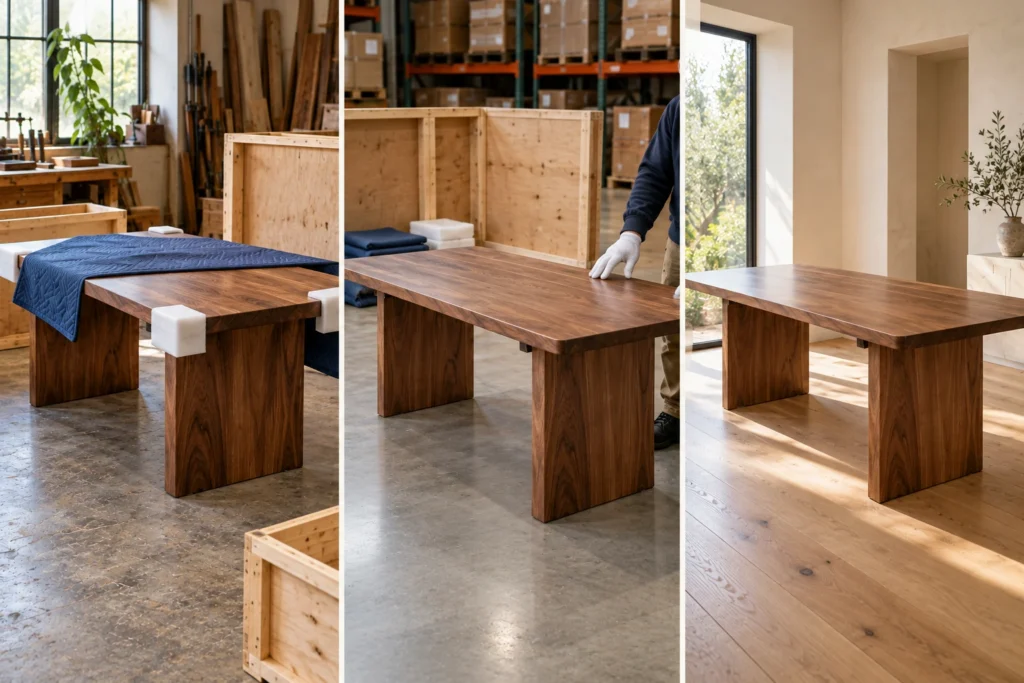
A receiving warehouse can unpack furniture, document its condition, store pieces, and coordinate delivery across several suppliers. This service helps when the home is unfinished or a room needs a coordinated installation. Inspect pieces promptly and follow the seller’s and carrier’s reporting deadlines. Photograph any damage and keep the packaging when needed for a claim.
White-glove delivery can cover room placement, assembly, and packaging removal. Confirm the included tasks, access requirements, and appointment availability in advance. Early arrival can create storage costs, while restricted access can prevent installation even when the furniture arrives on schedule.
How to Plan Your Order Around Your Move-In Date
Start procurement while planning the renovation, then coordinate production with site readiness. Waiting until decorating wraps up can leave essential rooms empty for months.
Step 1: Work Backward From Your Installation Date
Use the longest complete order-to-installation schedule, then add a contingency allowance.
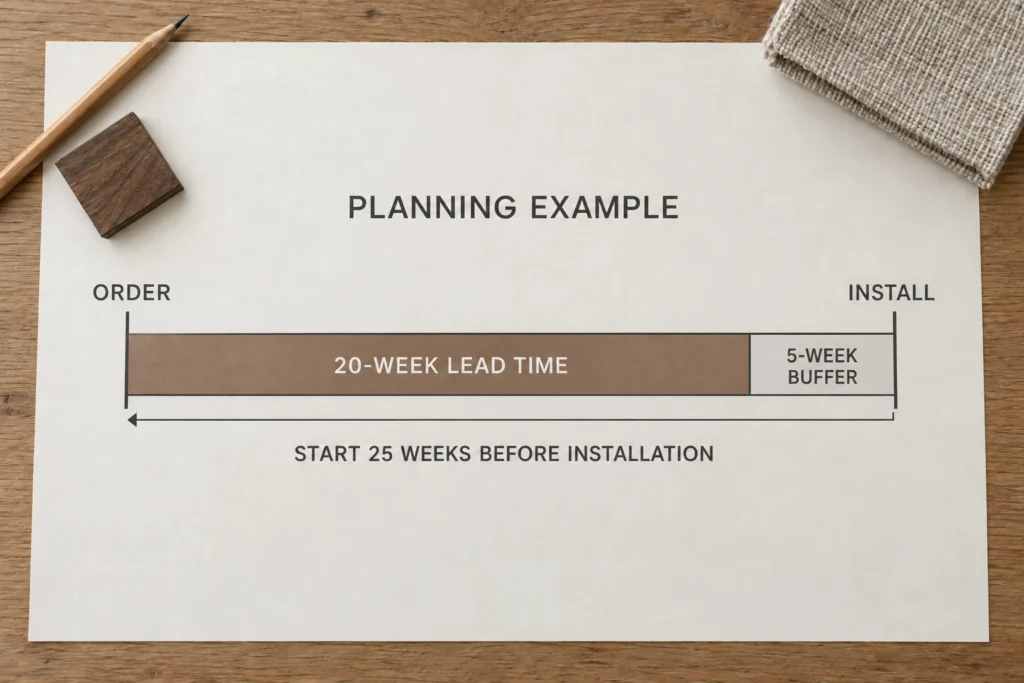
Procurement start date = target installation date minus complete lead time minus contingency
For a project with several long-lead pieces, a 4 to 6 week contingency is a practical starting allowance. Increase that buffer when approvals, special materials, or fixed shipping departures add risk.
For example, a 20-week complete lead time plus five weeks of contingency means starting at least 25 weeks before installation. Add approval or transportation time separately only when the quotation leaves it out.
Step 2: Confirm Specifications and Order Priorities
Prioritize both long-lead pieces and furniture needed right at move-in. Order hand-knotted rugs, imported furniture, and complex cabinetry early. Coordinate beds, primary seating, and dining furniture so essential rooms stay usable, and let smaller decorative pieces follow later.
Prepare a furniture specification brief covering dimensions, materials, finishes, and open decisions. For fitted pieces, confirm when site measurements become reliable before authorizing manufacture. Measure doors, elevators, stairs, and turning spaces along the delivery route. Production can run alongside renovation once you lock in the necessary dimensions and details.
Step 3: Track Milestones and Prepare Alternatives
Keep a single schedule showing approvals, material receipt, production release, completion, shipment, and installation. For high-risk pieces, approve an alternative before a delay happens. Having a backup ready keeps you from restarting the selection process when time is tight.
If an order slips:
- Explore faster transportation when transit is the bottleneck.
- Deliver completed rooms in phases.
- Arrange temporary furniture where essential.
- Evaluate an approved substitute after resolving cancellation terms for the original order.
Starting an approved base component before finalizing other details is sometimes possible with the workshop’s written agreement. Do not assume partial approval reserves production capacity.
Frequently Asked Questions
Can I Pay Extra to Speed Up My Custom Furniture Order?
Sometimes, when the supplier has a practical way to shorten production or transportation. Ask which stage the fee changes and get the revised date in writing. Extra payment cannot remove material shortages, approval requirements, or necessary curing time.
What Should I Do If My Custom Furniture Is Delayed?
Request a written explanation, the current production stage, and revised completion and delivery dates. Then adjust the affected room’s installation, use an approved alternative, or arrange temporary furniture. Confirm whether partial delivery adds handling or storage charges.
Can I Cancel a Custom Furniture Order If It Arrives Late?
You may have cancellation rights, depending on custom-order restrictions and the type of delay. For US purchases covered by the FTC’s Mail, Internet, or Telephone Order Merchandise Rule, a shipping delay requires notice and a choice between accepting the delay or canceling for a full refund. A change-of-mind restriction does not automatically resolve a missed-shipment dispute.
Request a Lead Time for Your Custom Furniture Order
Submit your furniture requirements to LEHOME with the product reference, quantity, dimensions, materials, destination, and target installation date. These details help the team evaluate development, production, and shipment timing for your order.