
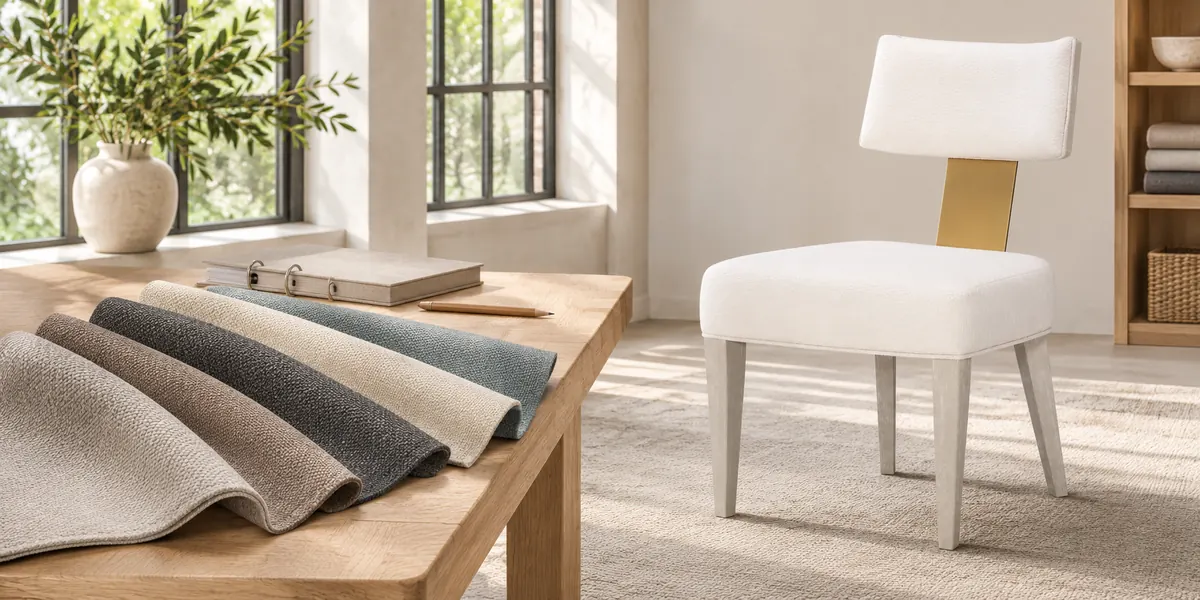
Polyester blends, polypropylene, solution-dyed acrylic, wool blends, and tightly woven cotton blends all provide dependable upholstery for residential and commercial furniture. For high-traffic seating, dense polyester weaves handle daily friction best, while solution-dyed acrylic is standard wherever sunlight risks fading standard dyes.
Selecting the right cover comes down to how a fabric behaves on the final piece, not just its fiber content. The right specification balances abrasion, seam strength, and real-world cleaning before an order goes into production.
What Makes Upholstery Fabric Durable?
A durable upholstery fabric holds its shape, color, and seam strength through daily wear without becoming difficult to clean. Fiber type is only part of that equation; yarn twist, weave structure, backing, finishes, and the shape of the frame itself all dictate how long an upholstered piece lasts.
Performance breaks down into five practical metrics:
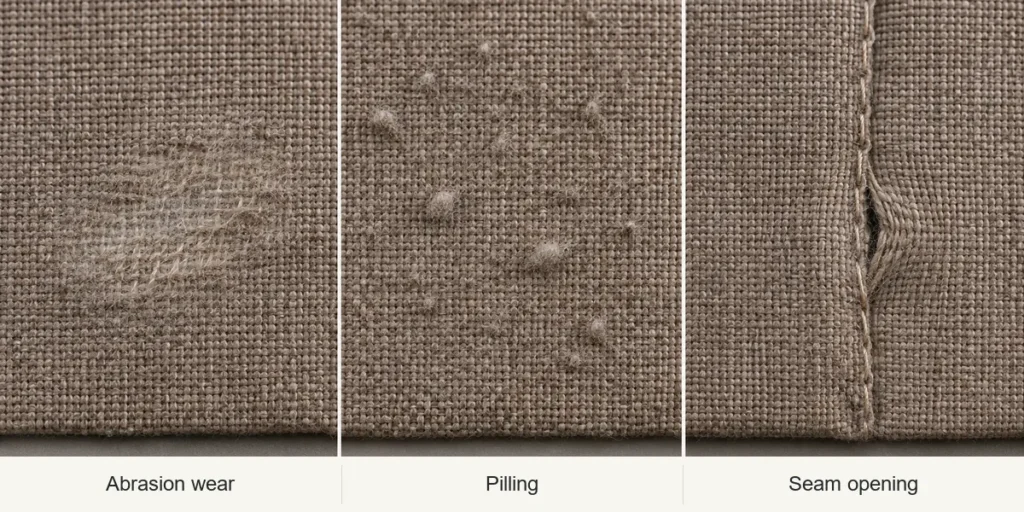
- Abrasion resistance tracks surface wear from repetitive friction.
- Pilling resistance measures whether loose fibers tangle into surface fuzz.
- Seam slippage resistance tracks whether yarns pull apart under tension at stitch lines.
- Colorfastness rates how well dyes resist sunlight and crocking (rubbing off on clothes).
- Cleanability checks whether standard methods lift stains without stripping coatings or distorting yarns.
Martindale and Wyzenbeek tests measure abrasion differently, so their cycle counts cannot be converted or compared directly. High rub counts also do not predict actual service life if seams pull apart under load. Similarly, heavy fabric weight can give a substantial hand-feel, but fabric mass does not prevent snags, pilling, or weak seams.
Durable Upholstery Fabrics to Consider
Performance varies widely across mills, weaves, and finishes. Rather than relying on generic fiber categories, evaluate each fabric as a complete specification. When sourcing chairs and benches, test how the fabric performs over the specified foam density, seam placement, and frame edges.
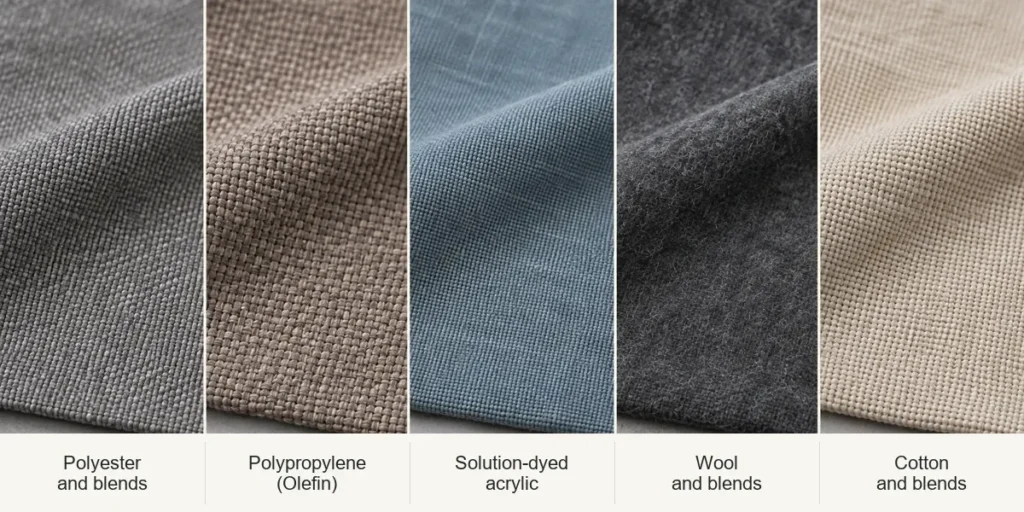
Polyester and Polyester Blends
High tensile strength and natural wrinkle resistance make polyester the standard choice for high-use seating. Blending polyester with nylon, rayon, or cotton adjusts the hand and luster, though polyester blends remain prone to pilling and oil-based staining if left untreated.
Polyester microfibers use ultra-fine filaments that resist snagging, making them popular for pet-friendly lines. However, tightly woven microfibers can trap heat or change shade when brushed, so verify the backing and nap on finished cushions. On curved frames like an upholstered chair, drape and stretch matter as much as rub counts. Flat swatches will not show whether the fabric puckers around tight curves or pulls thin over corners.
Polypropylene (Olefin)
Polypropylene (olefin) absorbs almost no moisture, making it naturally resistant to water-borne stains, mildew, and chemical degradation. It works well in high-spill dining areas and transitional indoor-outdoor spaces. Its main weakness is heat sensitivity. Olefin can melt or glaze under high friction or hot-water extraction, and it absorbs oil-based soils readily. Cleaners must stick to cold or lukewarm water, and specifications should account for oily residue buildup.
Solution-Dyed Acrylic
Solution-dyed acrylic is the standard choice for spaces with significant sun exposure. Pigments are locked directly into the liquid polymer before fiber extrusion, so color permeates the entire yarn cross-section rather than coating the surface. This process provides exceptional UV resistance, but the raw fiber remains softer than polyester or nylon. Ensure the mill uses an upholstery-grade tight weave or reinforced backing to prevent early surface fuzzing and seam pull.
Wool and Wool Blends
Wool provides natural flame resistance, soil repellency, and elasticity. It recovers well from compression and resists crushing on seat cushions, making it a staple for executive seating and structured lounge furniture. Raw wool easily shrinks and felts under heat and agitation. For this reason, commercial blends typically add nylon to boost abrasion resistance and dimensional stability. Specify dry-clean-only or designated foam cleaning; chlorine bleach and hot extraction permanently degrade animal fibers.
Cotton and Cotton Blends
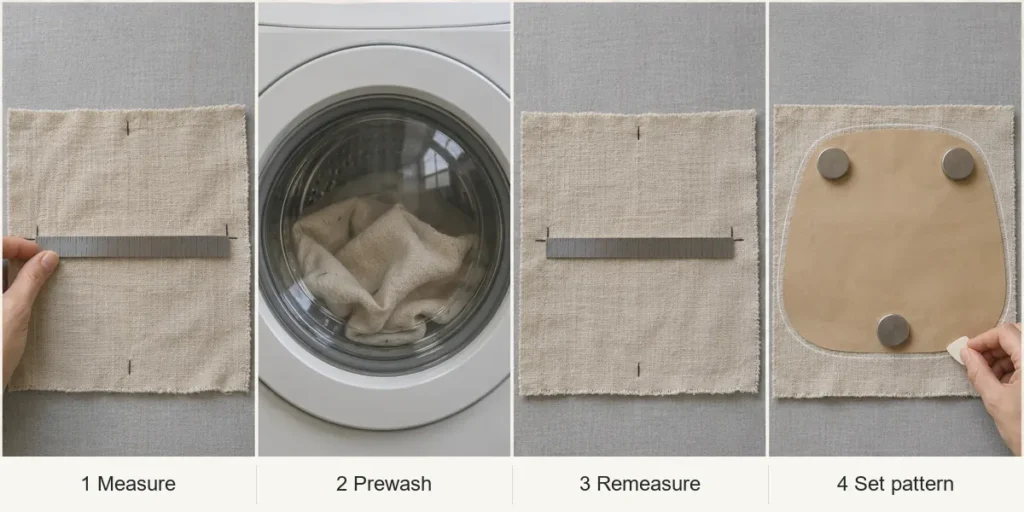
Cotton offers breathability, a soft hand, and zero static buildup. Used alone, pure cotton wrinkles easily and wears quickly along cushion edges, which is why commercial programs usually blend it with polyester or linen. Heavy cotton canvas or duck builds substantial body, but heavy yarns still slip at seams under loose weaves. For slipcovers or removable cushion casings, pre-wash the fabric to check shrinkage and dimensional stability before finalizing pattern sizing.
| Fabric Type | Main Strengths | Key Limitations | Recommended Checks | Suitable Applications |
| Polyester and blends | High tensile strength; wrinkle resistance | Attracts oil stains; potential pilling | Martindale/Wyzenbeek, pilling tests, stain release | Everyday residential chairs and benches |
| Polypropylene (Olefin) | Near-zero moisture absorption; stain resistance | Heat-sensitive; absorbs oily stains | Cleaning method compatibility, abrasion, seam slippage | Dining chairs and spill-prone seating |
| Solution-dyed acrylic | Excellent UV and fade resistance; bleach-cleanable | Lower abrasion resistance than polyester without backing | Lightfastness, seam pull, backing adhesion | Seating placed near large windows or sunrooms |
| Wool and blends | Natural elasticity; flame and wrinkle resistance | Requires careful cleaning; sensitive to heat and bleach | Pilling, seam slippage, dry-cleaning response | Structured armchairs, lounge seating, and headboards |
| Cotton and blends | Breathable; soft hand; no static | Wrinkles easily; absorbs liquids readily | Abrasion, seam slippage, laundering shrinkage | Casual seating and pre-shrunk removable covers |
How to Choose Durable Fabrics for Furniture Orders
Match the fabric to how each component of the furniture functions. A weave that holds up on an outer back panel will quickly fail on a high-friction seat cushion.
Product Application
Map out where the fabric sits on the frame:
- Seat cushions and front rails take constant rubbing, compression, and shear stress.
- Back cushions require drape, breathability, and recovery against creasing.
- Tightly upholstered shells put tension on seams and test how cleanly the weave wraps compound curves.
When outfitting coordinated dining collections, verify how the selected roll drapes across both armless side chairs and fully upholstered carvers before signing off on batch cutting.
Performance Requirements
Set numerical acceptance thresholds rather than relying on vendor terms like “commercial grade” or “performance fabric”:
- Abrasion: Specify minimum cycles under the relevant regional standard (e.g., 30,000+ double rubs Wyzenbeek or 40,000+ rubs Martindale for commercial seating).
- Seam slippage: Require ASTM D4034 or ISO 13936 test reports showing warp and weft yarn retention under tension.
- Pilling: Look for Class 4 or higher on ASTM D3511 / ISO 12945.
- Lightfastness: Set AATCC 16 or ISO 105-B02 standards for daylight exposure.
Document every required standard in your furniture OEM brief to keep mill batches aligned with factory tolerances.
Maintenance Requirements
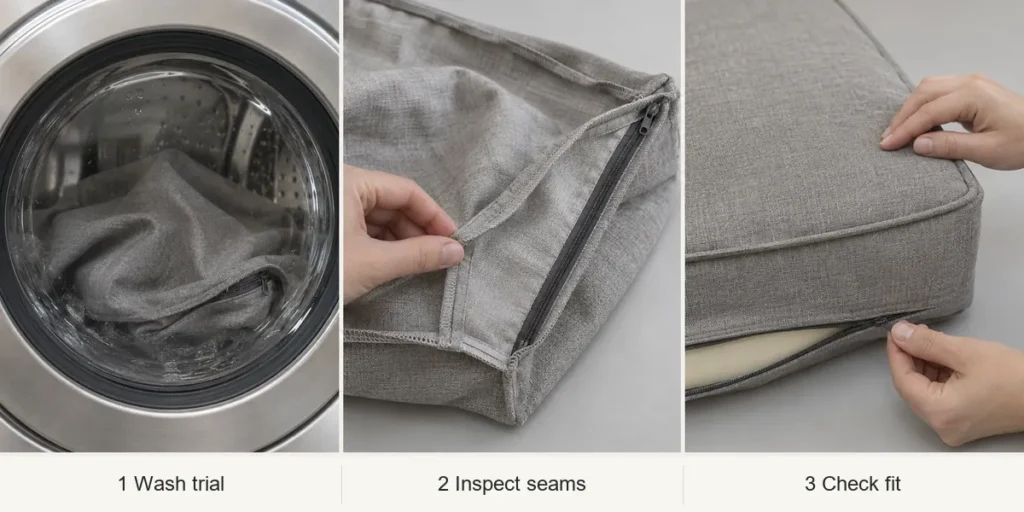
Align the fabric finish with how end users will clean it. Specify approved cleaning codes (W, S, W-S, or X), allowable stain-removal chemicals, and maximum extraction temperatures. Removable cushion casings need separate validation. Even if the face fabric tolerates water, the inner backing, interlining, thread, and zippers can shrink or warp in a wash cycle. Always run fully assembled test casings through laundering trials before marking covers washable.
Target Cost and Yield
Calculate fabric costs per finished piece rather than price per running yard or meter:
- Bolt width: Narrow 54-inch bolts generate more cutting waste on large sofa cushions than 58- or 60-inch rolls.
- Pattern repeats: Large plaids, stripes, or directional jacquards require extra yardage for pattern matching across cushions and backrests.
- Roll yield: Flaws, selvage width, and nap direction dictate whether pattern pieces can be nested tightly.
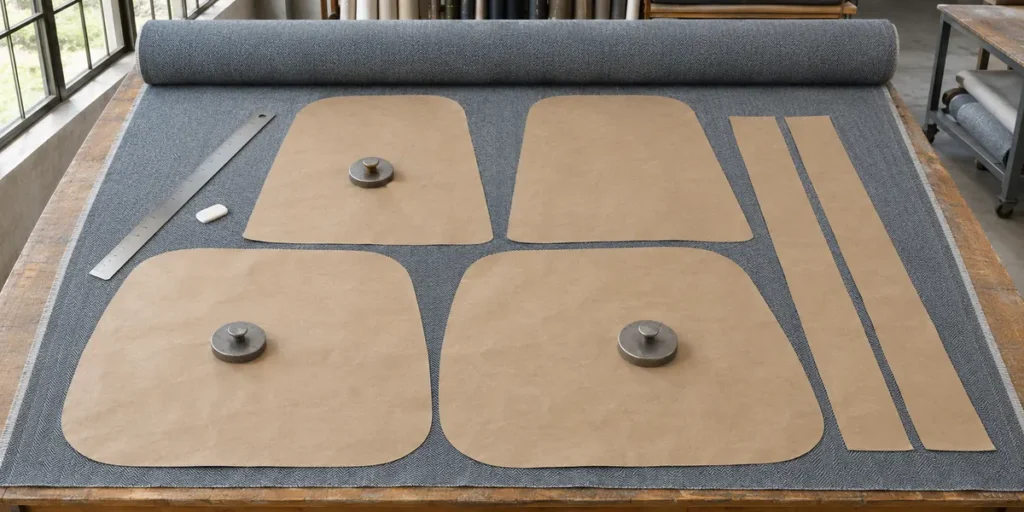
For a practical breakdown of how fabric yield, pattern waste, and bench labor determine final unit pricing, see our custom furniture cost guide.
What to Check Before Ordering Upholstered Furniture
Lock down lab test data, physical swatches, and sewn sample pieces before releasing production purchase orders.
| Verification Item | What to Verify | Required Documentation |
| Fabric construction | Fiber content, weave structure, backing knit, and coating integrity | Technical data sheet and full-width master swatch |
| Lab test reports | Specific test standards, cycle counts, and pass/fail thresholds | Third-party lab reports tied directly to the mill reference number |
| Golden sample review | Seam puckering, compound curves, corner tension, and foam recovery | Factory-signed prototype with dated QC approval notes |
| Cleaning validation | Dimensional stability, coating adhesion, and hand feel after washing/spot cleaning | Wash-test report and approved cleaning instructions |
| Dye-lot consistency | Color matching (Delta E tolerances), texture, and backing weight | Retained master cutting and batch roll inspection logs |
| Substitution control | Procedures for mill stockouts and fiber formulation shifts | Engineering change notice (ECN) protocol requiring written approval |
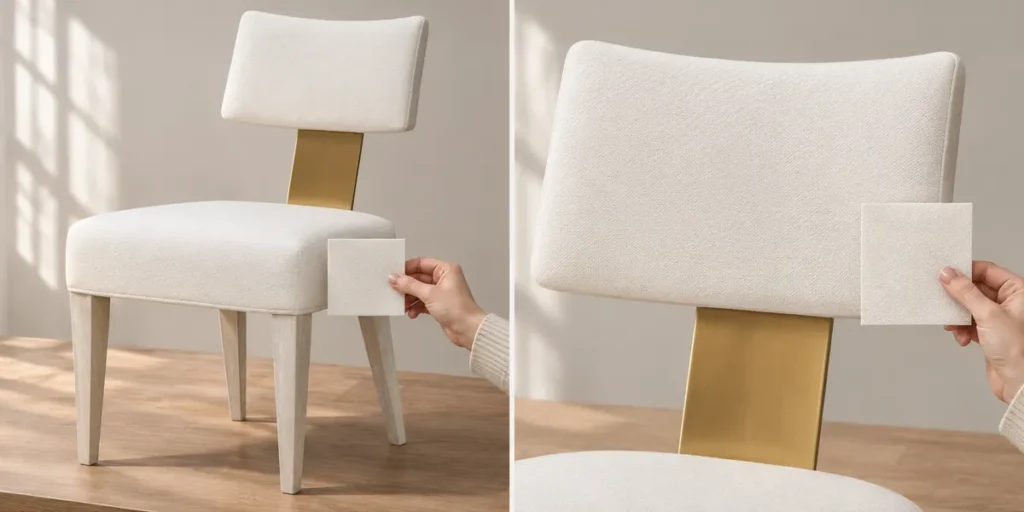
Approving an initial prototype locks in fabric behavior on that specific geometry. If a mill changes the backing or yarn supplier later, request new test swatches and re-evaluate seam integrity. To begin sampling or request project pricing, submit your upholstery requirements with the target frame styles, fabric preferences, planned volume, and regional compliance requirements.
Frequently Asked Questions
Is leather more durable than fabric?
It depends on the leather cut and the fabric specification. Dense collagen fibers give full-grain and top-grain leathers exceptional tear resistance, allowing them to outlast most fabrics and develop a natural patina over decades. However, bonded leathers or low-grade splits with polyurethane coatings peel quickly. High-performance woven synthetics often outperform cheap leathers on puncture resistance, scratch tolerance, and routine stain maintenance.
Are recycled fabrics as durable as virgin fabrics?
Yes, provided the yarn extrusion and weave density meet the same testing benchmarks. Post-consumer recycled polyester (rPET) shares the same chemical backbone as virgin polyester and regularly hits 50,000+ Wyzenbeek double rubs. Assess recycled options against the exact same tensile, pilling, and seam-slippage standards as virgin textiles.
Can upholstered furniture be reupholstered later?
Reupholstery is straightforward if the inner frame uses kiln-dried hardwood, mortise-and-tenon joinery, and accessible fastener points. Frames built with glued particleboard or staples shot into thin plywood tear apart when stripped, making recovery uneconomical. For hospitality and commercial programs, keeping master pattern files and fastener specs on hand simplifies future maintenance.