
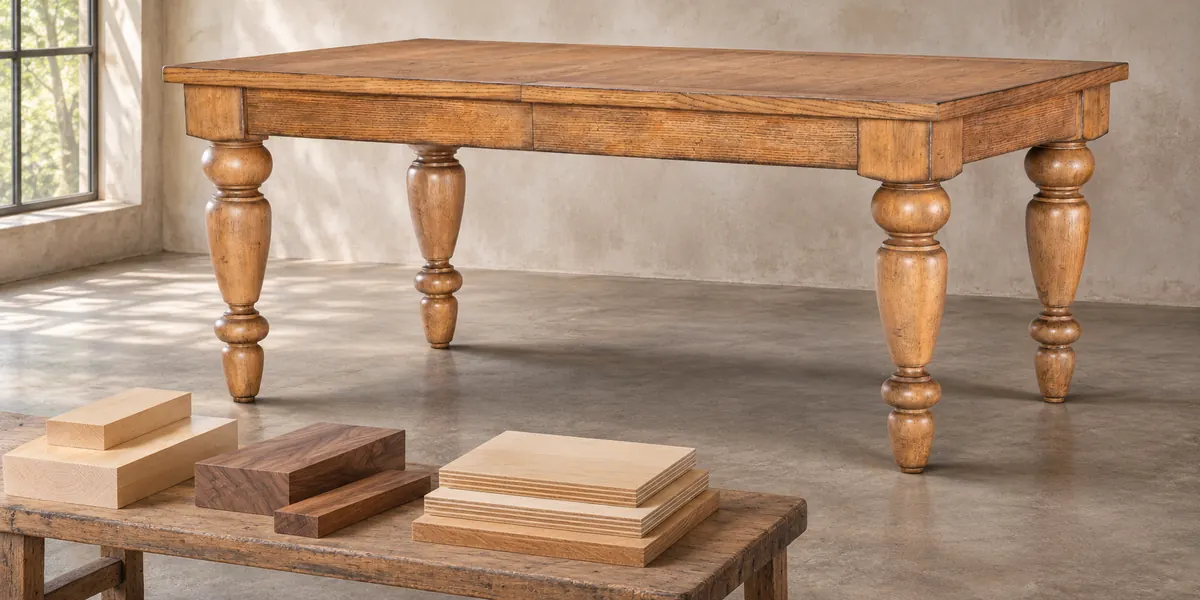
Wood for furniture falls into three basic categories: solid hardwoods, solid softwoods, and engineered wood panels. Oak and hard maple handle everyday indoor wear, walnut brings rich dark color, and engineered panels like plywood deliver dimensional stability. Each material has distinct mechanical limits, costs, and working qualities, mostly suited to indoor use, with teak serving as the primary outdoor exception.
Main Categories of Wood for Furniture
Wood materials split into solid lumber and manufactured panels. Hardwood and softwood identify botanical tree groups, whereas engineered wood describes how the board is manufactured.
Solid Wood
Solid wood consists of sawn lumber, either as single boards or edge-glued panels. Natural grain runs through the full thickness of the piece. Hardwoods come from flowering, broad-leaved trees such as oak and walnut. Softwoods come from conifers like pine. The botanical terms do not define mechanical hardness; several softwoods dent less easily than softer hardwoods.
Engineered Wood
Engineered products bind veneers, fibers, or wood particles together with resin adhesives. Controlling this composite structure yields flat, uniform boards that resist shifting or swelling across their width. Performance depends on the core grade, panel thickness, adhesive rating, and whether the piece stays indoors or faces moisture.
10 Common Types of Solid Wood for Furniture
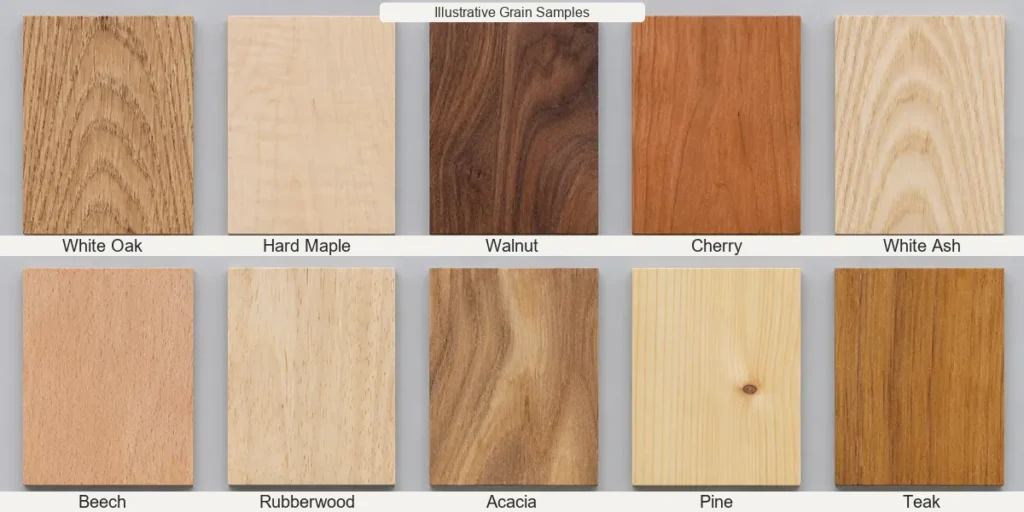
Always verify the exact botanical species before comparing lumber properties, as broad trade names often lump different timbers together.
Oak
Oak features bold, open grain and holds up well in tables, chairs, and casework. Red oak leans toward warmer pinkish tones, whereas white oak carries an olive-tan cast. While white oak heartwood resists decay naturally, indoor pieces in either species still require topcoats to guard against water and stains.
Maple
Maple has a dense, pale grain and a closed texture. Sugar maple (hard maple) resists impacts and dents, suiting heavy-contact surfaces like dining tops and desks. Soft maples dent more easily. Because maple absorbs pigment blotchily, evaluate stained samples on finished stock rather than raw cuts.
Walnut
American black walnut stands out for its rich brown heartwood, occasionally accented by creamy sapwood. It is a preferred choice for desks, credenzas, and decorative casework where natural tone takes priority. While priced at a premium, walnut is softer and dents more readily than hard maple or standard furniture oaks.
Cherry
American black cherry shows a tight, satiny texture and a warm reddish hue that darkens noticeably as light reaches it over time. It cuts and shapes smoothly for dressers, dining sets, and molded details. When pairing new cherry additions with existing sets, budget for this ongoing patina shift.
Ash
White ash is a pale, coarse-grained hardwood known for exceptional shock resistance and flexibility under steam. It is common in chair legs, bent parts, and structural framing. Ash belongs indoors; mechanical strength does not grant it exterior rot resistance.
Beech
Dense, pale, and finely textured, beech is a workhorse lumber for dining chairs, turned legs, and internal upholstery frames. It steam-bends cleanly. However, beech expands and contracts significantly with humidity changes, so wide solid tops and tight drawer slips require careful moisture allowances.
Rubberwood
Harvested from rubber plantation trees at the end of their latex yield, rubberwood is an economical, pale timber used widely for indoor tables and components. Freshly sawn lumber decays quickly without prompt kiln-drying and chemical treatment to deter insects and fungi.
Acacia
Trade names for acacia span dozens of distinct species with wide variances in density and grain. Plantation-grown Acacia mangium, for instance, yields medium-brown heartwood suitable for tabletops and assembled panels. Always lock down the precise species to avoid surprises in hardness and color consistency.
Pine
Eastern white pine is lightweight, soft, and easy to machine, displaying prominent growth rings and knots. It suits casual shelving, rustic cabinetry, and painted dressers. Because everyday contact leaves impressions, use it where surface wear is acceptable or expected.
Teak
Tectona grandis produces oily, golden-brown heartwood prized for outdoor durability and minimal seasonal movement. It works equally well for high-end indoor cabinetry and patio dining. Unfinished exterior teak weathers to a silvery gray, and its sapwood lacks the decay resistance of the heartwood.
Engineered Wood Options for Furniture
Engineered panels address the structural limits of solid lumber, particularly cross-grain expansion and localized defects.
Plywood
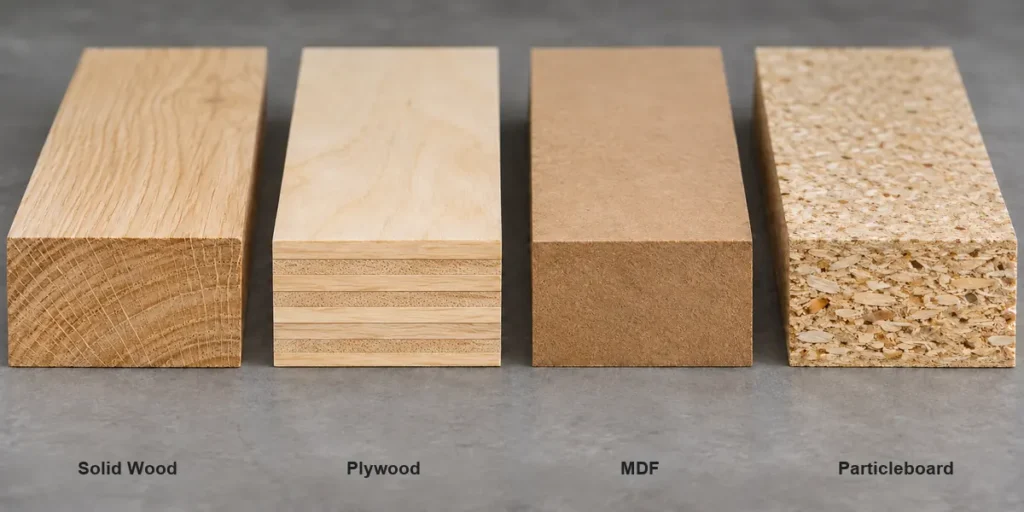
Plywood alternates the grain direction of cross-laminated veneers under heat and pressure. This cross-ply structure cancels out dimensional expansion and gives sheets balanced strength in both axes. It serves as the standard substrate for cabinet carcasses, structural partitions, and broad shelving. Overall quality hinges on core voids, face grade, sheet thickness, and adhesive water resistance.
MDF
Medium-density fiberboard consolidates refined wood fibers and synthetic resin into a flat, void-free core. It routes cleanly without grain tear-out, making it ideal for painted cabinet faces, shaped moldings, and profiled edges. Standard MDF swells if exposed to liquid water; moisture-resistant variants withstand humid ambient air but remain vulnerable to direct standing water.
Particleboard
Particleboard compresses wood chips and resin flakes into an affordable core panel, typically faced with melamine or laminate. It functions reliably for budget-conscious casework and flat shelving when engineered with adequate span supports, edge-banding, and specialized hardware. Heavy shelf loads and repeated screw cycles can degrade the core.
Wood Veneer and Panel Cores
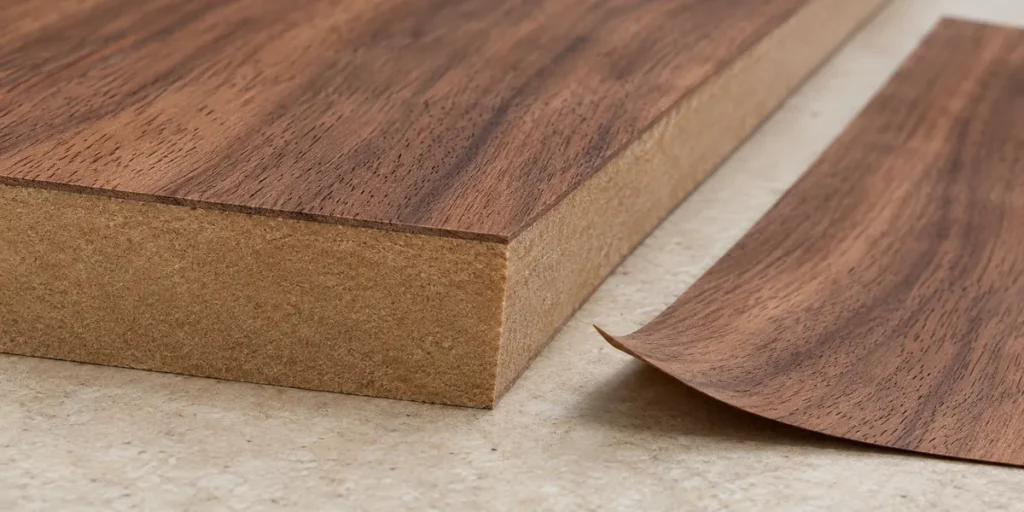
Veneer consists of genuine sliced hardwood applied over an engineered substrate, preserving the visual character of solid wood while eliminating panel warping. A walnut face behaves differently depending on whether it covers plywood, MDF, or particleboard: the veneer dictates appearance, while the core determines fastener retention, weight, and edge stability. Both layers must be defined in the build specification.
Comparison of Common Solid Woods for Furniture
Dent resistance below describes unfinished wood, not scratch resistance or furniture lifespan. Cost comparisons for common North American species reflect published U.S. lumber pricing; other entries identify where a direct ranking would be unreliable.
| Wood Type | Appearance | Dent Resistance | Relative Cost | Common Furniture Uses |
| Oak | Prominent grain | Higher than black walnut for northern red oak and white oak | Red oak below white oak | Tables, chairs, cabinets |
| Maple | Pale, fine texture | High for sugar maple; lower for common soft maples | Hard maple below walnut | Tabletops, dressers |
| Walnut | Brown heartwood | Moderate | Higher than maple and cherry | Desks, cabinets |
| Cherry | Warm, fine texture | Moderate | Below walnut | Bedroom furniture, cabinets |
| Ash | Light, pronounced grain | High for white ash | Similar to red oak | Chairs, frames |
| Beech | Pale, fine texture | High for American beech | Regional supply affects ranking | Chairs, turned parts |
| Rubberwood | Pale cream | Moderate | Economical near plantation supply | Indoor tables, components |
| Acacia | Brown, variable grain | Species-dependent | Species and source determine ranking | Tables, cabinets |
| Pine | Light, often knotty | Low for eastern white pine | White pine below red oak | Dressers, shelving |
| Teak | Golden-brown | Moderate | Generally a premium material | Outdoor furniture, tables |
Treat these cost relationships as general benchmarks; board thickness, yield, lumber grade, and shipping distance shift local pricing.
How to Choose the Best Wood for Your Furniture
Matching species to specific components works far better than applying a single material across an entire piece. Coordinated dining collections, for instance, often blend solid legs, bent stretchers, and veneered panels to meet different structural demands.
Match the Material to the Furniture Application
Prioritize oak or sugar maple on horizontal surfaces that absorb daily cutlery drops and writing pressure. Chairs and bed rails require clear grain and rigid joinery more than surface hardness alone. For expansive case sides and wardrobe doors, veneered panels or quality plywood prevent seasonal warping. On an end table with configurable top and base materials, call out the parts individually: the top endures drinks and scratches, while the base primarily handles static weight.
Account for Humidity and Movement
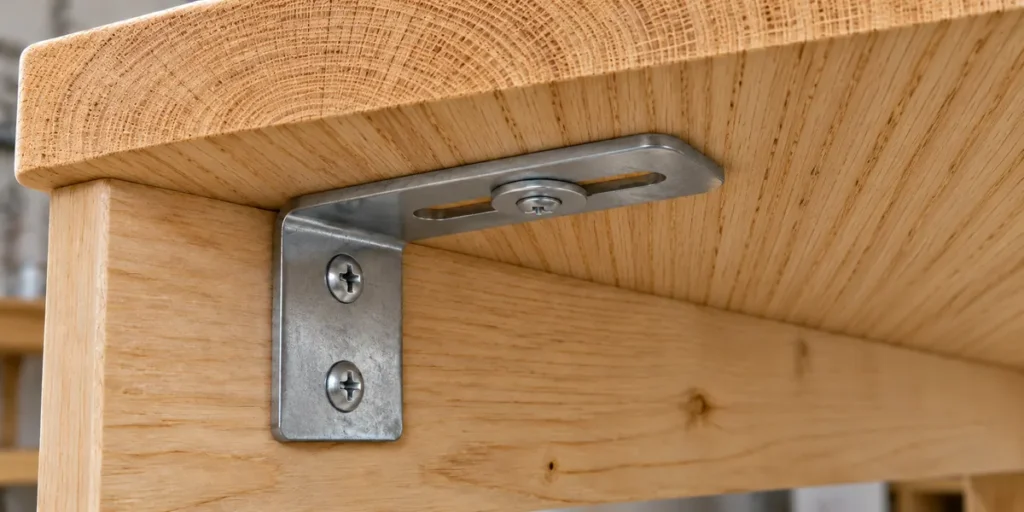
Solid boards expand across their grain in humid seasons and shrink in dry air. Kiln drying conditions lumber for fabrication, but it does not stop hygroscopic movement. Fabricate furniture at an equilibrium moisture content aligned with its final indoor climate. Tabletops need figure-eight clips or slotted fasteners that let the top slide across the aprons. Surface wood furniture finishes retard the rate of moisture absorption, though they never seal it off permanently.
Balance Aesthetics, Budget, and Machining
Select solid walnut or cherry when exposed natural grain justifies lumber costs. Opt for pine when upfront budget overrides scratch protection. Quality veneer over an MDF or plywood core delivers high-end grain figure at lower material cost with greater stability.
When comparing custom furniture costs, evaluate joinery, yield loss, and surface preparation alongside raw board-foot rates. Low-grade lumber often demands excess labor in sorting and defect-cutting that erases initial savings.
Confirm Specifications and Physical Samples
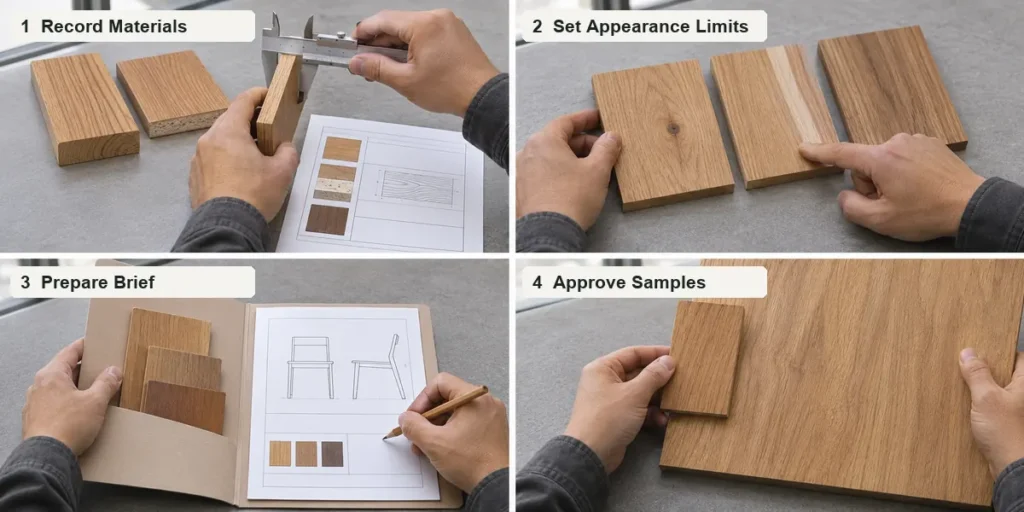
Document the botanical species, core substrate, board thickness, grain direction, and topcoat system. Set clear thresholds for allowable sapwood, pin knots, and color variation, and compile these specifications into a furniture OEM brief prior to prototype milling. Always approve stain samples on the exact production timber, as grain density directly alters pigment uptake.
To review production timber options for your next project, discuss your material requirements with LEHOME. Include furniture dimensions, project volume, ambient environment, and target finish to receive a comprehensive material breakdown and quote.
Frequently Asked Questions
Is Bamboo a Type of Wood?
No. Bamboo is a grass, not a tree. In furniture, it is processed into strand-woven or laminated boards that function much like engineered wood. Evaluate bamboo furniture by its adhesive quality, lamination density, and moisture sealing rather than comparing it to solid timber.
Is Reclaimed Wood Suitable for Furniture?
Yes, provided it is properly remediated. Salvaged lumber can harbor hidden fasteners, internal rot, insect larvae, or old toxic finishes. Safe fabrication requires thorough metal scanning, kiln sterilization to kill pests, and planing down to sound, clean wood before assembly.
What Does FSC Certification Mean for Furniture Wood?
It verifies that timber is harvested from responsibly managed forests with verifiable chain-of-custody tracking. Key labels include FSC 100% (entirely certified virgin timber), FSC Mix (certified and controlled wood), and FSC Recycled. Always confirm certification at the product level, as a manufacturer’s facility certification does not automatically apply to every item they produce.
External Sources
- USDA Forest Products Laboratory — Wood Handbook: Wood as an Engineering Material
- FRIM — Characteristics, Properties and Uses of Rubberwood and Acacia Mangium
- The Wood Yard — Published Lumber Price List
- Institute of Wood Science and Technology — Bamboo Wood
- Mississippi State University Extension — Reclaimed Wood Offers Advantages and Beauty
- FSC USA — On-Product Labels