

Custom made furniture cost runs from roughly $600 for a solid-wood nightstand to $3,500 to $12,000 for bespoke hardwood dining tables and credenzas from independent workshops. Factory batch production follows different economics, spreading engineering and setup costs across dozens or hundreds of units. Knowing how materials, labor hours, construction details, and freight stack inside a quote prevents miscomparisons across suppliers.
How Much Does Custom Furniture Cost?
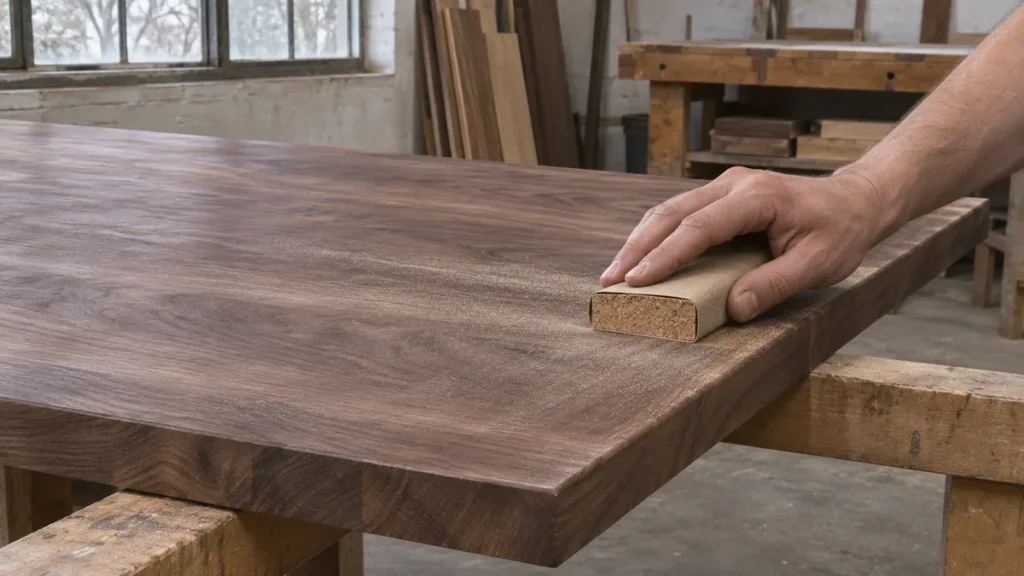
For single bespoke pieces, skilled labor outweighs raw lumber on the invoice. Published figures from Portland workshop Sawyer Design indicate that materials typically make up roughly one-fifth of a custom hardwood piece’s price. A 36-by-78-inch Oregon black walnut dining table uses 50 to 80 board feet of lumber plus base stock and consumables, totaling $800 to $2,500 in materials, yet requires 50 to 80 hours of milling, joinery, sanding, and finishing.
At $75 to $120 per hour for skilled U.S. shop labor, 60 bench hours add $4,500 to $7,200 before overhead or margin. Repeat factory runs flip that ratio because computer-numerical-control (CNC) programming, jigs, and spray-booth setups amortize across volume. When buyers source coordinated dining collections rather than standalone items, shared finishes and component profiles moderate tooling costs even as tables, chairs, and sideboards retain separate assembly labor.
Custom Furniture Cost by Furniture Type
Workshop price lists show how size, storage hardware, and geometry alter single-piece budgets. The table compiles verified retail pricing from two U.S. makers, Sawyer Design and Beavers Custom Barnwood, rather than bulk factory wholesale rates.
| Furniture Type | Price Range | Price Basis | Main Cost Drivers |
| Dining table | $3,500 to $9,000; or $400 per linear foot (42 in wide) | Sawyer Design (hardwood); Beavers Custom Barnwood (reclaimed wood) | Dimensions, timber species, base design |
| Credenza | $4,500 to $12,000 | Sawyer Design; single piece | Length, doors, drawers, hardware |
| Desk | $2,800 to $7,500 | Sawyer Design; single piece | Top area, drawer storage, cable routing |
| Nightstand or end table | $600 to $900 | Beavers Custom Barnwood; per piece | Drawer fitting, edge profile, proportions |
| Bed | Queen: $2,000; King: $2,200 | Beavers Custom Barnwood; size tiers | Frame size, headboard height, rail hardware |
| Sculptural or bent-laminated piece | $6,000 to $25,000 | Sawyer Design; single piece | Compound curves, vacuum laminations, shaping |
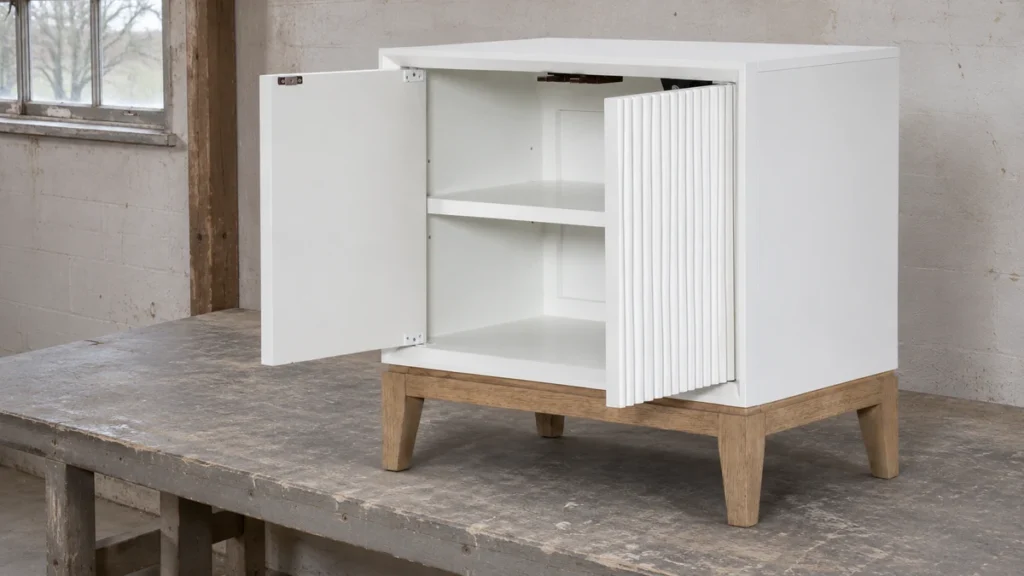
Price does not fall in step with footprint. A nightstand uses far less lumber than a dining table, yet drawers, slides, and door reveals demand nearly as many setups per square foot. Compact casegoods such as occasional tables and accent consoles therefore carry higher labor per board foot than plain slab tables, because every opening requires individual squaring and fitting.
What Affects the Cost of Custom Furniture?
Three variables govern custom pricing: physical scale and material grade, structural complexity, and batch volume. Changing one specification often forces a new build method rather than a linear material adjustment.
Furniture Size and Materials
Dimensions raise cost nonlinearly when wider spans alter structural loads. Adding length to a table uses more lumber along the same apron, whereas widening a top or shelf often demands thicker stock, steel channels, or heavier joinery to prevent sagging and warping.
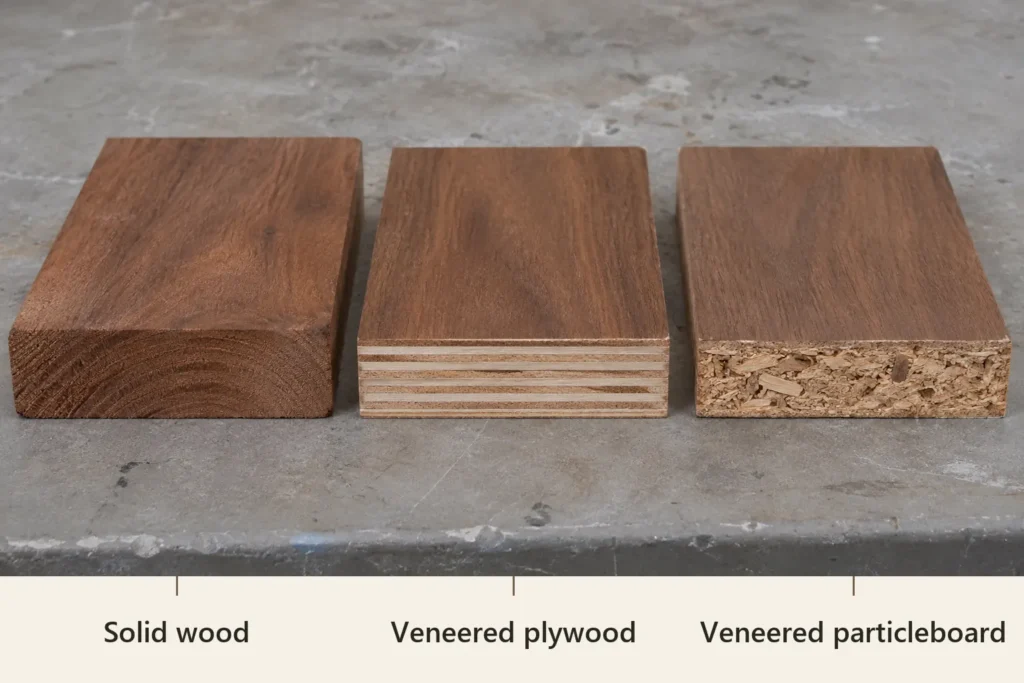
Material terms also hide wide cost gaps. “Walnut finish” describes color, not construction; it can mask stained ash or veneer thinner than 1 millimeter (under 1/32 inch) over particleboard. Comparing quotes requires verifying both surface and core across common furniture wood species and engineered panels. In the United States, hardwood plywood, medium-density fiberboard (MDF), and particleboard must meet Environmental Protection Agency Toxic Substances Control Act (TSCA) Title VI formaldehyde emission limits (40 CFR Part 770), requiring certified panels and compliance records. For upholstery, frame wood, foam density, suspension, and patterned fabrics requiring extra yardage for seam matching all raise material bills.
Design and Construction
Original silhouettes cost more than modified catalog frames because engineering precedes cutting. Custom designs need CAD drafting, joinery testing, and jigs, while bent-laminated curves require dedicated pressing forms.
Hardware and safety mandates add further work. Soft-close slides and concealed hinges raise parts bills and routing precision. For freestanding U.S. dressers and chests standing 27 inches or taller, weighing at least 30 pounds, and holding 3.2 cubic feet or more of enclosed storage, the Consumer Product Safety Commission’s 16 CFR Part 1261 rule (incorporating ASTM F2057) requires tip-over stability, often necessitating drawer interlocks, counterweights, or revised base geometry.
Order Quantity and Production Method
Every custom SKU carries fixed setup tasks: CAD modeling, CNC toolpaths, color matching, and jigs. A single piece absorbs all setup hours, whereas a 50-unit or 200-unit batch spreads them across the run.
Lower unit quotes still warrant total-cost scrutiny. High minimum order quantities tie up capital and warehouse space, and splitting a batch across multiple finishes reintroduces separate spray-booth setups. Approvals, material sourcing, and curing also govern custom furniture lead times, tying volume planning directly to delivery schedules.
How to Read a Custom Furniture Quote
Headline unit prices mislead when suppliers treat engineering, hardware, crating, or freight differently. Splitting a quote into four buckets shows whether a lower bid reflects efficiency or excluded scope.
Materials and Manufacturing Costs
The base price should cover lumber or certified panels, veneers, adhesives, finishes, hardware, and labor. As noted in the single-piece walnut table example, raw materials account for roughly one-fifth of the price while milling, joinery, and finishing hours drive the rest.
Reviewing this line requires confirming botanical species, veneer thickness, plywood core grade, and finish coat counts. Vague descriptions let cheaper bidders swap softer timber, thinner edge banding, or fewer sealing passes behind an identical silhouette.
Design and Development Fees
Custom and OEM quotes often itemize shop drawings, finish strike-offs, prototypes, or tooling. Some factories credit sample fees above an order threshold, while independent shops bill development outright.
Confirm how many revision rounds the fee covers, whether sample charges apply toward bulk orders, and who owns production drawings and molds. Uncapped revisions delay tooling release and erode margins.
Additional Costs Beyond the Furniture Price
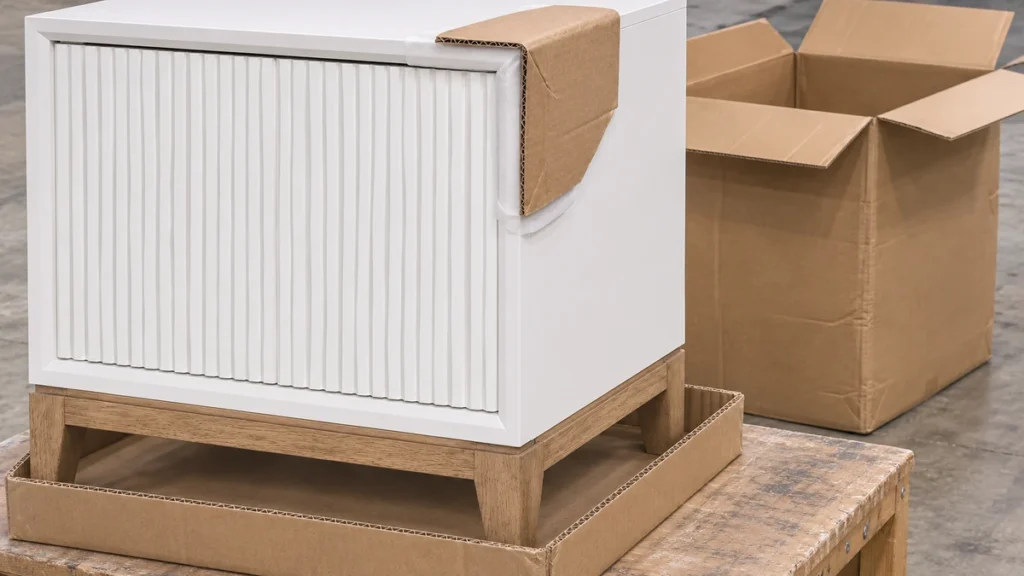
Ex-factory prices exclude much of what moves furniture into use. Crating, corner protection, freight, cargo insurance, customs duties, taxes, and white-glove placement add substantially to total spend. In a simple arithmetic example, a $4,000 unit price plus $150 for crating and $350 for delivery reaches $4,500 before taxes or tariffs.
Cross-border contracts should specify the International Chamber of Commerce Incoterms 2020 rule (such as EXW, FOB, CIF, or DDP) and named destination. Incoterms allocate freight, export and import clearance, insurance, and the exact point of risk transfer.
Payment and Change Terms
Suppliers typically require a deposit to lock materials and factory capacity, followed by payments at sample approval or pre-shipment inspection. Written terms should state whether deposits are refundable if a prototype misses tolerances.
Change-order clauses govern midstream revisions. Adjusting stain color before spraying adds minimal cost, whereas resizing drawers after cutting creates scrap stock, reordered hardware, and schedule delays. Written cost and timeline sign-offs protect both parties before work resumes.
How to Reduce Custom Furniture Costs
Meaningful savings come from removing redundant engineering and bench hours rather than buying weaker cores or thin finishes.
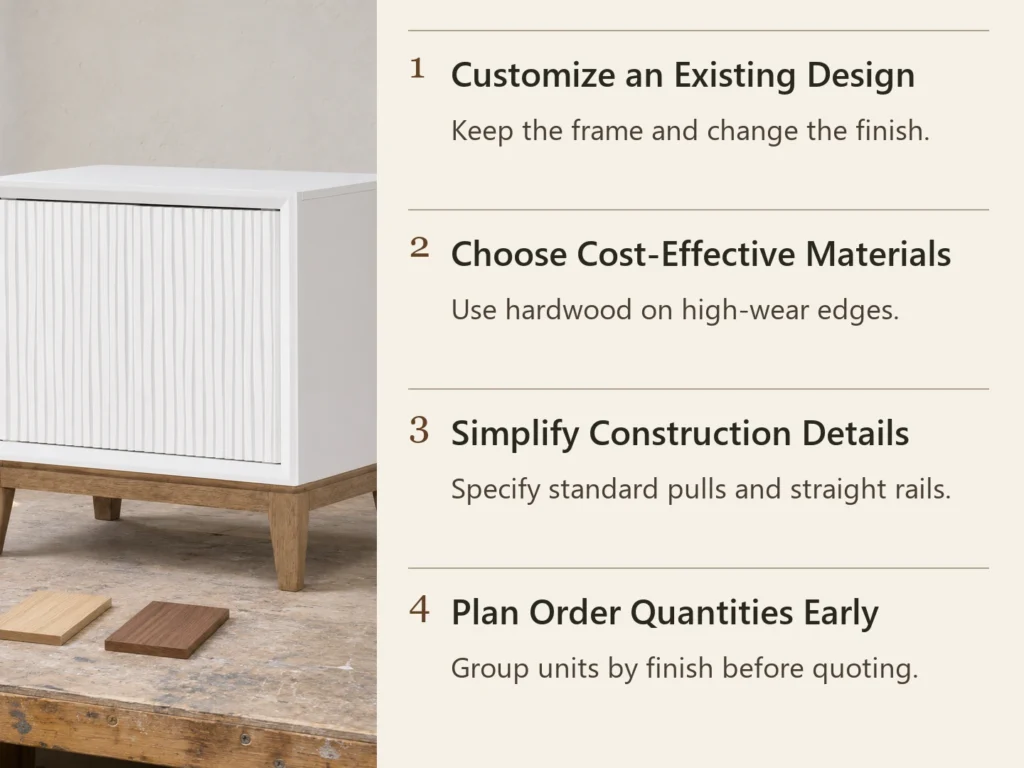
Customize an Existing Design
Starting from an existing production frame eliminates structural prototyping and new jigs. Changing stain colors, upholstery fabrics, or minor dimensions within current tooling preserves proven joinery at lower development cost. Suppliers can verify which tweaks leave patterns and cartons intact.
Choose Cost-Effective Materials
Allocating material cost by wear protects durability on a budget. Solid hardwood belongs on table edges, chair legs, and frames that absorb impacts and allow sanding. For wide cabinet sides or long credenza tops, book-matched veneer over furniture-grade plywood or TSCA-compliant MDF stays flatter and costs less than wide solid slabs.
Simplify Construction Details
Labor clusters around joints, curves, and moving parts. Straight mitered or mortised rails instead of curved aprons, fewer drawers, and standard commercial pulls instead of custom cast hardware cut machining and hand-sanding hours without sacrificing clean proportions.
Plan Order Quantities Early
Sharing realistic volumes and finish counts before quoting lets factories optimize panel nesting and batch lumber buys. Separating fixed dimensions and tolerances from open engineering options when preparing a furniture OEM brief keeps suppliers from padding quotes for ambiguity.
Frequently Asked Questions
Is Modifying Existing Furniture Cheaper Than Ordering New Custom Furniture?
Modifying existing furniture costs less only when the frame is structurally sound and updates stay cosmetic, such as refinishing or swapping hardware. Once a piece needs regluing, rebuilt drawer boxes, or complete stripping and reupholstery, skilled labor plus two-way transport often matches or exceeds new fabrication cost.
Can I Supply My Own Fabric or Materials for Custom Furniture?
Many workshops and factories accept Customer’s Own Material (COM) or leather after approving a physical swatch for thickness, stretch, and pattern repeat. Buyers must confirm yardage overages, inbound freight, defect liability, and whether production holds until textiles arrive; reviewing durable upholstery fabrics beforehand prevents costly re-sourcing delays.
How Long Is a Custom Furniture Quote Valid?
A custom furniture quote stays valid only through the expiration date stated in writing by the supplier. Because hardwood lumber, textiles, hardware, and freight rates shift regularly, unaccepted quotes lapse once that window closes. Any change to dimensions, materials, quantity, or delivery terms also requires a revised quotation.
Request a Custom Furniture Quote
Whether you are benchmarking a single prototype or pricing a multi-SKU residential program, accurate costing starts with clear specifications. Share your product references, target dimensions, material and finish details, quantities, and destination market with LEHOME to request a custom furniture quote reviewed by our engineering team.
External Sources
- Sawyer Design: Bespoke Furniture Cost in 2026
- Beavers Custom Barnwood: Prices
- U.S. Environmental Protection Agency: Formaldehyde Emission Standards for Composite Wood Products
- eCFR: 16 CFR Part 1261, Safety Standard for Clothing Storage Units
- U.S. International Trade Administration: Know Your Incoterms
- International Chamber of Commerce: Incoterms 2020